
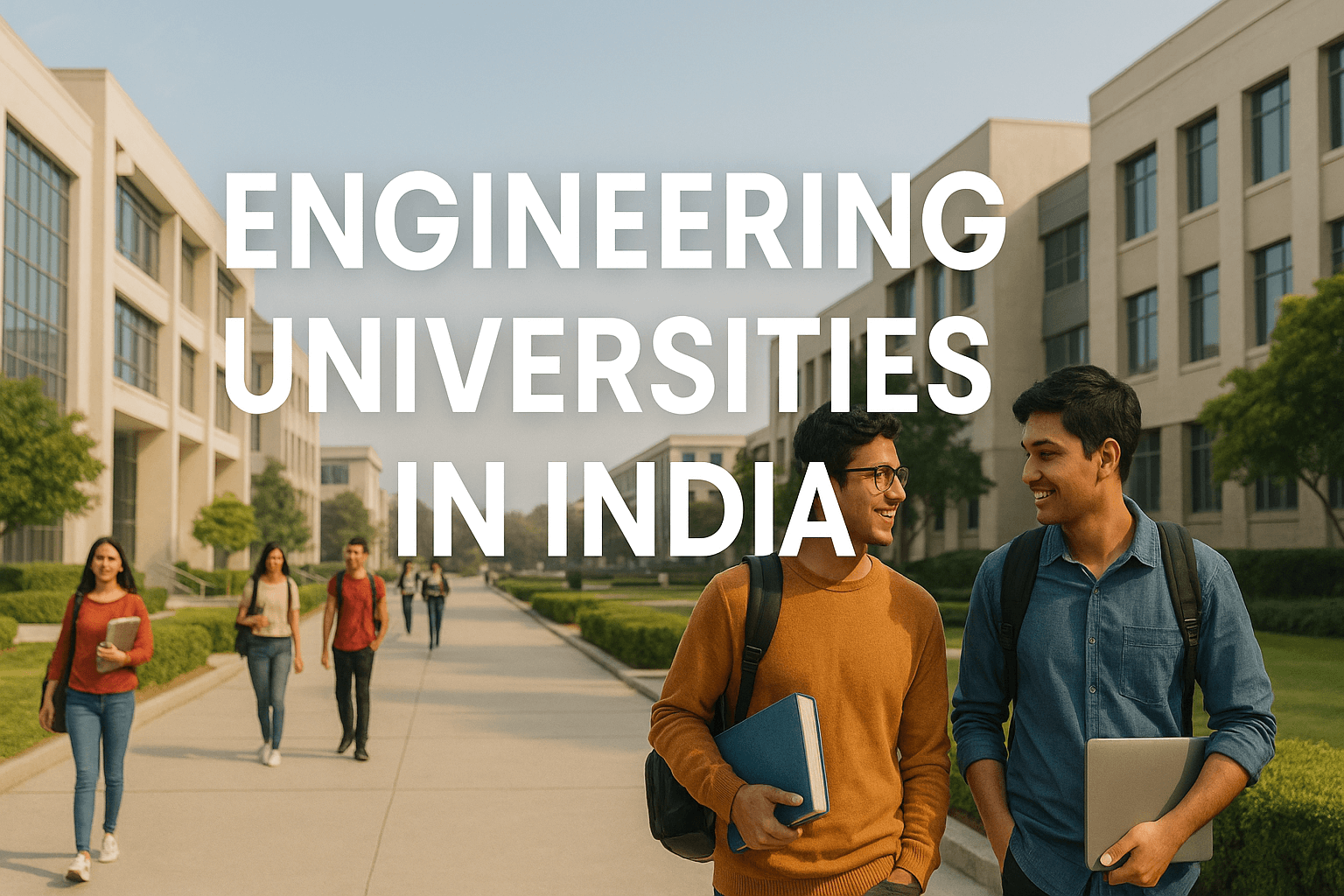
Engineering Universities in India: 2025 Guide to Courses, Fees, Admissions, Rankings & Careers
Engineering universities in India continue to shape millions of careers every year. These universities are known for quality teaching, robust research, modern labs, and powerful campus ecosystems. If you’re planning your future in engineering, understanding how engineering universities in India work can help you make confident, informed choices.
This comprehensive guide covers courses, fees, admissions, eligibility, placements, rankings, student life, and future trends—everything you need to know before choosing the right engineering university.
What Are Engineering Universities in India?
Engineering universities in India are higher-education institutions offering undergraduate, postgraduate, and doctoral-level engineering programs. These universities have UGC approval, AICTE approval, and strong academic frameworks for producing skilled graduate engineers.
Most engineering universities in India follow structured curriculums, industry-oriented training, and project-based learning.
Why Engineering Universities in India Matter
Engineering universities in India hold significant value for students and parents because:
- They provide recognized degrees accepted in India and abroad.
- They offer strong placement opportunities with global companies.
- Students gain access to labs, internships, and industry training.
- They offer scholarships, hostel facilities, and modern campus life.
- They act as gateways to high-growth careers in technology and innovation.
These universities also support students preparing for exams, industry certifications, hackathons, and research projects.
Key Highlights of Engineering Universities in India
Here are some of the most important features that students look for:
1. Accreditation & Approval
- UGC approval ensures university-level recognition.
- AICTE approval ensures technical programs meet national standards.
- NAAC grade reflects the academic and administrative quality.
2. Popular Courses
- Computer Science Engineering (CSE)
- Mechanical Engineering
- Electrical & Electronics Engineering
- Civil Engineering
- Information Technology
- Electronics and Communication Engineering (ECE)
- Biotechnology Engineering
- Aerospace Engineering
3. Admission Pathways
- Entrance exams like JEE Main, JEE Advanced, KCET, COMEDK, VITEEE, BITSAT.
- University-based exams and merit-based admissions.
- Counseling and cut-off processes vary by state and institution.
4. Placement Strength
Most top engineering universities in India offer:
- Dedicated training and placement cells
- Internship support
- Industry-tie ups with companies like Infosys, TCS, Wipro, Amazon, and Bosch
- Career services for soft skills, group discussions, and interviews
5. Average Fees
Fees typically range from ₹80,000 to ₹3,00,000 per year depending on the university and course.
Comparison: Types of Engineering Universities in India
| Type of Institution | Examples | Approvals | Typical Fees | Admission Mode |
|---|---|---|---|---|
| Central Universities | IITs, NITs | UGC + AICTE | ₹75,000–₹1.5L/yr | JEE Main/Adv |
| State Universities | VTU, Anna University | UGC + AICTE | ₹70,000–₹1.2L/yr | State exams |
| Private Universities | Many across states | UGC + AICTE | ₹1L–₹3L+/yr | Entrance + Merit |
| Deemed Universities | VIT, Manipal | UGC | ₹2L–₹4L/yr | Univ exams |
Common Myths About Engineering Universities in India
Myth 1: Only IIT graduates can get top jobs
Many students believe IITs are the only route to high-paying jobs. In reality, thousands of graduates from private and state universities secure excellent placements due to skill-based hiring.
Myth 2: Higher fees mean better education
Fees depend on infrastructure and location. Many affordable state universities offer excellent faculty, student life, and outcomes.
Myth 3: Placements depend only on the college
Placements depend on skills, internships, projects, communication abilities, and career planning—not just the university name.
Step-by-Step Guide: How to Choose the Best Engineering Universities in India
Step 1: Identify your preferred engineering branch
Shortlist based on your interest—CSE, Mechanical, ECE, Civil, AI & ML, Data Science, or Aeronautical Engineering.
Step 2: Check UGC approval, AICTE approval, and NAAC grade
You can verify using:
- UGC website: https://www.ugc.gov.in
- AICTE website: https://www.aicte-india.org
Step 3: Review the curriculum and faculty expertise
Look for modern labs, updated syllabus, and industry collaboration.
Step 4: Compare fees and scholarships
Many universities offer merit-based and need-based financial support. Explore scholarship options here:
https://collegezollege.com/scholarships
Step 5: Understand placement records
Check average salary, top recruiters, and internship opportunities.
Step 6: Visit campus or attend virtual tours
Campus life matters—hostels, clubs, events, labs, and accessibility.
Step 7: Start your admission process early
Get details here:
https://collegezollege.com/admissions
Courses, Eligibility, Fees, Cut-Off & Placement Details
Popular Engineering Courses in India
| Course | Duration | Eligibility | Avg Fees | Avg Salary |
|---|---|---|---|---|
| Computer Science Engineering | 4 yrs | 10+2 PCM | ₹1–3L/yr | ₹6–12 LPA |
| Mechanical Engineering | 4 yrs | 10+2 PCM | ₹1–2.5L/yr | ₹4–7 LPA |
| Civil Engineering | 4 yrs | 10+2 PCM | ₹90K–₹2.5L/yr | ₹3–6 LPA |
| Electrical Engineering | 4 yrs | 10+2 PCM | ₹1–2.5L/yr | ₹4–8 LPA |
| ECE | 4 yrs | 10+2 PCM | ₹1–3L/yr | ₹5–10 LPA |
| IT Engineering | 4 yrs | 10+2 PCM | ₹1–3L/yr | ₹6–12 LPA |
Entrance Exams for Engineering Universities in India
| Exam | Accepted By | Difficulty | Purpose |
|---|---|---|---|
| JEE Main | NITs & many private universities | Moderate | UG admissions |
| JEE Advanced | IITs | High | IIT admissions |
| KCET | Karnataka colleges | Moderate | State admissions |
| COMEDK | Karnataka private universities | Moderate | UG engineering |
| VITEEE | VIT University | Moderate | University admissions |
| BITSAT | BITS Pilani | High | UG engineering |
For state-wise entrance info, you can explore:
https://collegezollege.com/top-bangalore-colleges
Cut-Off Trends in Engineering Universities in India
Cut-offs depend on:
- Program demand
- Category (General, OBC, SC/ST)
- Entrance exam score
- University ranking
As per national ranking data from:
https://www.nirfindia.org
top-tier institutions have cut-offs above 90 percentile, while mid-tier universities may offer flexible entry options.
Placement Scenario in Engineering Universities in India
Most engineering universities in India maintain:
- Dedicated placement cells
- Soft skill and aptitude training
- Internship tie-ups
- Industry visits and workshops
Average Salary Range
- Tier-1 universities: ₹10–25 LPA
- Tier-2 universities: ₹4–10 LPA
- Tier-3 universities: ₹2–5 LPA
Top Recruiting Sectors
- IT services
- Software development
- Electronics & semiconductor
- Manufacturing
- Civil & infrastructure
- AI & Data Science
- Renewable energy
- Automotive & aerospace
Career Scope After Studying in Engineering Universities in India
Students from engineering universities in India can pursue careers such as:
- Software developer
- Mechanical engineer
- Civil project engineer
- Electrical design engineer
- Data analyst
- Network engineer
- Robotics engineer
- AI & ML specialist
- Cybersecurity analyst
Future Trends
- Growth in AI, IoT, robotics, and green technology
- Higher demand for coders, analysts, data engineers
- Increase in global tech hiring from India
- More cross-disciplinary engineering roles
Conclusion
Engineering universities in India continue to evolve with modern infrastructure, updated courses, strong placements, and global relevance. Choosing the right university can shape your long-term future and open doors to exciting career opportunities.
If you’re exploring options related to engineering universities in India, you can check available colleges and compare details to find the right fit. Students who need help with admissions, scholarships, or choosing the right program can connect with our counseling team on WhatsApp for friendly guidance.