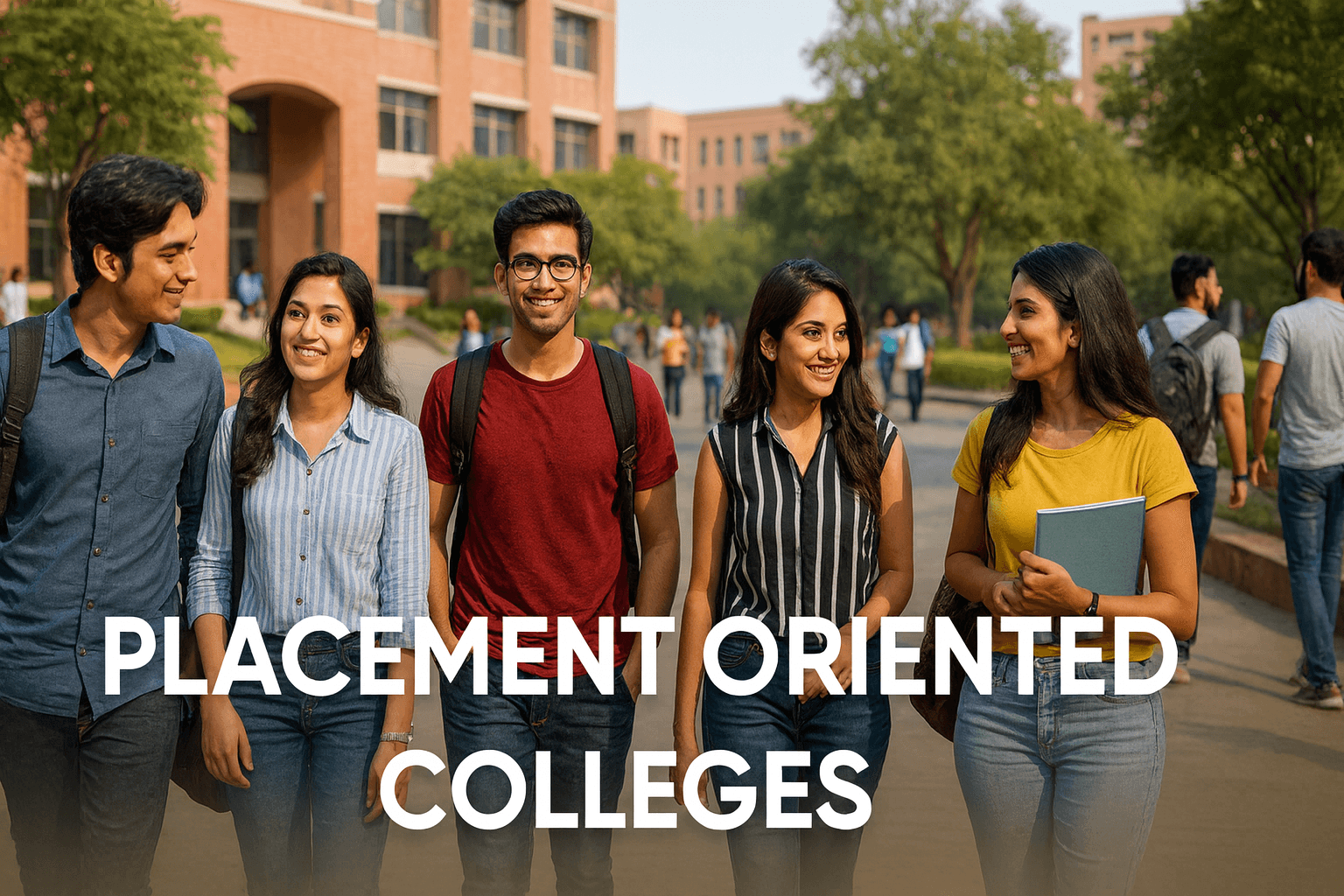
Placement Oriented Colleges: The New-Age Pathway to Job-Ready Education
For today’s students, the biggest question is no longer “Which course should I choose?” Instead, it’s “Will this college help me build a stable career?”
This shift in mindset is why placement oriented colleges are becoming the preferred choice for millions of learners and parents across India.
A placement-first approach ensures that education is not just theoretical but directly connected to real industry needs. In this detailed guide, we explore how these colleges work, what makes them different, and why they matter more than ever in 2025.
The Rise of Placement Oriented Colleges in India
Over the last decade, India’s job market has transformed dramatically. Automation, emerging technologies, startup culture, and global hiring trends have changed employer expectations.
Because of this, traditional degree colleges often struggle to keep up. Students want skills. Employers want job-ready graduates. The gap between both created the demand for placement oriented colleges — institutions designed to bridge this gap using:
- practical learning
- industry mentoring
- internship pipelines
- modern labs
- real-world projects
- career-focused training
Today, many top institutions that follow placement-centric models also maintain strong academics, UGC approval, AICTE approval, NAAC grades, and competitive rankings.
What Makes a College Truly “Placement Oriented”?
Many colleges claim strong placements, but only a few deliver consistent, transparent, and skill-driven results. Below are the real features that define genuine placement oriented colleges.
1. A Curriculum Built for Hiring, Not Just Exams
The best placement campuses don’t wait for university updates. They collaborate with industry experts and update courses every year. Subjects reflect actual job requirements.
Examples include:
- Python, C++, Java fundamentals
- Cloud computing tools
- Data analytics & visualization
- DevOps basics
- Cybersecurity awareness
- Digital marketing
- Financial modeling
- Soft skills and communication
This helps students avoid outdated content and stay aligned with current hiring trends.
2. Deep Industry Collaboration
Strong colleges build long-term partnerships with companies. These associations shape:
- internships
- certification programs
- elective subjects
- training sessions
- campus hiring pipelines
Companies often conduct:
- guest lectures
- hackathons
- project reviews
- innovation challenges
- pre-placement talks
This exposure helps students benefit from practical knowledge long before they graduate.
3. Placement Training That Actually Works
A major advantage of placement oriented colleges is their structured, year-long training modules. These programs focus on:
- communication skills
- aptitude & logical reasoning
- resume building
- personality development
- interview preparation
- group discussion practice
When combined with mock interviews and real projects, this training significantly boosts placement confidence.
4. Meaningful Internships and Industry Projects
Top institutions ensure students complete internships that add real value. Students gain:
- hands-on skills
- team experience
- exposure to work environments
- portfolio-ready project outputs
Internships also increase the chances of students receiving pre-placement offers.
5. Modern Campus Infrastructure Built for Learning
The physical environment influences placement success more than people realize. Placement-driven campuses usually feature:
- updated computer labs
- research rooms
- innovation centers
- coworking-style project spaces
- smart classrooms
- green, open, welcoming pathways
These spaces help students learn, collaborate, and experiment more effectively.
How to Evaluate Placement Oriented Colleges (Without Getting Misled)
Choosing the right institution requires careful analysis. Here’s a foolproof assessment method used by career counselors.
A) Placement Quality Indicators (Not Just Percentages)
Don’t look only at the “100% placement” claim. Instead, check:
- number of companies visiting
- average package vs highest package
- number of multi-offers
- internship-to-job conversion rate
- domain diversity (IT, non-IT, management, analytics, finance, etc.)
High-quality placement oriented colleges publish transparent placement reports and recruiters lists.
B) Look at Faculty Experience
Faculty should be:
- industry practitioners
- research scholars
- trainers with corporate background
- certified professionals
Strong mentorship is a key indicator of true placement focus.
C) Verify Approvals & Accreditation
This protects students from choosing unreliable institutions.
- UGC approval → essential for degree validity
- AICTE approval → compulsory for engineering & technical courses
- NAAC grade → reflects academic quality
- NIRF ranking → transparent national benchmarking
Useful reference sources:
D) Check the Alumni Network
Alumni working in:
- MNCs
- unicorn startups
- global tech companies
- consulting firms
→ reflect the long-term impact of the college’s placement ecosystem.
Courses Most Beneficial in Placement Oriented Colleges
These colleges aren’t limited to engineering; they support a wide range of fields.
Popular programs:
Technology & IT
- B.Tech (all branches)
- BCA
- MCA
- B.Sc Computer Science
Management
- BBA
- MBA
Commerce
- B.Com
- M.Com
Science
- B.Sc (Mathematics, Biotechnology, Electronics, Data Science)
Emerging New-Age Programs
- Artificial Intelligence
- Data Science
- Robotics
- Business Analytics
- Cloud Security
All programs integrate internship opportunities and skill-based electives.
Eligibility, Admission, Fees & Expected Cut-Offs
Below is a simplified overview of how admissions work in placement oriented colleges.
Eligibility Overview
| Program | Eligibility |
|---|---|
| B.Tech | 10+2 with PCB/PCM; entrance score (JEE, KCET, COMEDK) |
| BCA | 10+2 with any stream + basic math |
| BBA | 10+2 in any stream |
| MBA | Bachelor’s degree + entrance exam (MAT, CAT, etc.) |
| B.Com | 10+2 commerce/arts/science |
| B.Sc | 10+2 with science subjects |
Fee Range Guide (₹ per year)
| Course | Approx Annual Fees |
|---|---|
| B.Tech | ₹1–3 lakh |
| BCA | ₹80,000–₹1.5 lakh |
| BBA | ₹70,000–₹1.5 lakh |
| MBA | ₹1.5–4 lakh |
| B.Com / B.Sc | ₹40,000–₹1.5 lakh |
Scholarship resources:
https://collegezollege.com/scholarships
Cut-Off Ranges (Indicative)
- JEE Main: 65–90 percentile
- COMEDK: Rank 5,000–40,000
- KCET: Varies by branch
- CUET: Moderate scores acceptable in many colleges
Cut-offs depend heavily on yearly competition.
Placement Outcomes: What Students Can Expect
The placement ecosystem in India is rapidly growing. Skilled graduates from top placement oriented colleges receive offers in:
- IT services
- product companies
- fintech
- consulting
- analytics
- edtech
- manufacturing
- marketing
Salary Overview
| Course | Avg Package | Highest Package |
|---|---|---|
| B.Tech | ₹4–8 LPA | Up to ₹45 LPA |
| MCA/BCA | ₹3–7 LPA | Up to ₹25 LPA |
| BBA/MBA | ₹5–10 LPA | Up to ₹28 LPA |
| B.Com/B.Sc | ₹3–6 LPA | Up to ₹15 LPA |
Top recruiters include:
- Infosys
- TCS
- Cognizant
- EY
- Deloitte
- Accenture
- Amazon
- HCL
- HP
- Capgemini
- Tech Mahindra
Future of Placement Oriented Colleges in India
India is entering a skill-driven hiring era. These trends will dominate the next 5–10 years:
- AI-based hiring assessments
- portfolio-first selection instead of only marks
- industry certifications becoming mandatory
- hybrid work culture increasing
- startup hiring becoming mainstream
- more global companies hiring from Indian campuses
Students who join placement oriented colleges now will gain early exposure to these modern trends.
Final Thoughts
Your college decision shapes your confidence, skills, network, and long-term opportunities. Placement oriented colleges provide structured training, modern learning environments, corporate exposure, and internship-driven learning — everything needed to begin a career with clarity and momentum.
If you’re comparing placement-focused institutes, exploring options, or planning admissions, you can check reliable data here:
https://collegezollege.com/top-bangalore-colleges
If you need personal help choosing the right college, the counseling team is always available to guide you with clarity and honesty.