

Introduction
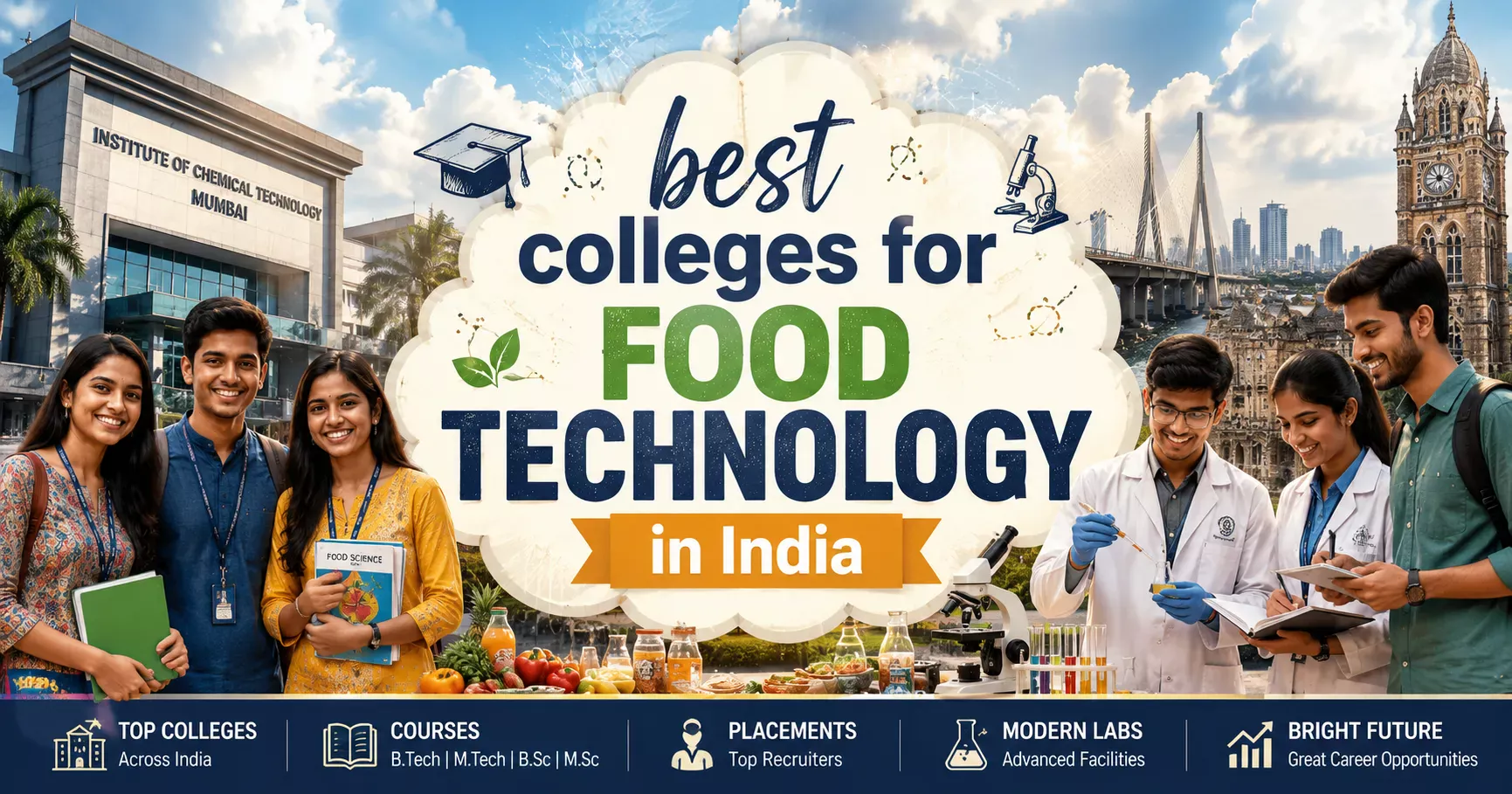
The food industry is one of the fastest-growing sectors in India. From packaged foods and dairy products to nutrition research and food safety, the demand for qualified food technology professionals continues to rise every year. As a result, thousands of students are now exploring the best colleges for food technology in India to build rewarding careers in food processing, quality control, research, product development, and food manufacturing.
Many parents feel anxious about choosing the right college because the food technology field is highly specialized. Students often wonder whether food technology offers good placements, attractive salaries, and long-term career growth. These concerns are natural because selecting the right institution can significantly impact future opportunities.
From our years of guiding students at CollegeZollege, we have observed that successful careers in food technology usually begin with strong academic foundations, industry exposure, laboratory training, internships, and placement support. Therefore, selecting a reputed institution becomes extremely important.
India currently has several prestigious universities and colleges offering Food Technology, Food Engineering, Food Science, Dairy Technology, and Food Processing programs. Some institutions are known for research excellence, while others excel in placements and industry partnerships.
According to industry data, India’s food processing sector contributes significantly to manufacturing output and employment generation. Consequently, graduates with specialized food technology skills remain in demand across private companies, multinational corporations, research organizations, and government agencies.
As a trusted education platform, CollegeZollege.com, we always guide parents with transparent information so they can make informed decisions. This comprehensive guide explores the best colleges for food technology in India, including courses, fees, career opportunities, admission procedures, campus facilities, and student experiences.
Students interested in engineering and science-related careers may also find useful insights from our guide to the best institutions in Bengaluru through this resource: Top Colleges in Bangalore.
Why choose this college/university?
Selecting a leading food technology institution offers several advantages that directly influence career growth.
Key Benefits of Studying Food Technology
✅ Industry-focused curriculum
✅ Modern food processing laboratories
✅ Research opportunities
✅ Internship programs
✅ Strong placement assistance
✅ Exposure to food manufacturing industries
✅ Food safety and quality control training
✅ Entrepreneurship opportunities
✅ International higher education prospects
Growing Demand for Food Technologists
India’s rapidly expanding food industry requires skilled professionals who understand:
- Food preservation
- Food packaging
- Quality assurance
- Food chemistry
- Food microbiology
- Product innovation
- Nutrition science
- Supply chain management
As a result, graduates from the best colleges for food technology in India often receive opportunities from:
- Nestlé
- Amul
- Britannia
- ITC
- PepsiCo
- Coca-Cola
- Parle
- Dabur
- HUL
- Mother Dairy
What Makes a College Stand Out?
While evaluating food technology colleges, students should consider:
| Factor | Importance |
|---|---|
| Accreditation | High |
| Laboratory Infrastructure | High |
| Industry Tie-Ups | High |
| Placement Records | High |
| Faculty Expertise | High |
| Research Output | Medium |
| Internship Support | High |
| Alumni Network | Medium |
Additionally, institutions accredited by NAAC often demonstrate stronger academic quality. Students can also explore accredited institutions through our guide on NAAC A+ Colleges.


Top Best Colleges for Food Technology in India
The following institutions consistently rank among the best colleges for food technology in India due to academic excellence, research facilities, industry exposure, and placement performance.
| College | Location | Type |
|---|---|---|
| ICT Mumbai | Mumbai | Government |
| NIFTEM Kundli | Haryana | Government |
| CFTRI | Mysuru | Research Institute |
| Tamil Nadu Agricultural University | Coimbatore | Government |
| Punjab Agricultural University | Ludhiana | Government |
| Anna University | Chennai | Government |
| SRM Institute of Science and Technology | Chennai | Private |
| Lovely Professional University | Punjab | Private |
| Amity University | Noida | Private |
| Jadavpur University | Kolkata | Government |
1. Institute of Chemical Technology (ICT), Mumbai
ICT is widely regarded as one of India’s leading institutions for food engineering and technology.
Highlights
- Strong research ecosystem
- Advanced laboratories
- Industry collaborations
- Excellent placements
- Highly qualified faculty
Students frequently appreciate the research-oriented environment and practical learning opportunities available at ICT.
2. National Institute of Food Technology Entrepreneurship and Management (NIFTEM)
NIFTEM has emerged as one of the premier institutes focused exclusively on food technology and food processing.
Major Strengths
- Specialized curriculum
- Government support
- Research funding
- Industry projects
- Startup ecosystem
Graduates often secure opportunities in food manufacturing, quality assurance, and product development sectors.
3. CFTRI, Mysuru
The Central Food Technological Research Institute is among India’s most respected food research institutions.
Why Students Prefer CFTRI
- Research excellence
- Innovation-driven culture
- Industry partnerships
- Food product development expertise
Many aspiring researchers consider CFTRI a dream destination for advanced food science education.
4. Tamil Nadu Agricultural University (TNAU)
TNAU offers excellent food technology programs supported by strong agricultural research infrastructure.
Advantages
- Practical exposure
- Affordable fees
- Research facilities
- Government recognition
Students benefit from extensive hands-on training throughout the program.
5. Anna University
Anna University consistently attracts food technology aspirants because of its reputation in engineering education.
Key Features
- Strong academics
- Experienced faculty
- Industry interaction
- Placement support
Its location in Chennai further enhances access to industrial training opportunities.
Courses offered
The best colleges for food technology in India provide a wide range of undergraduate, postgraduate, diploma, and doctoral programs.
Undergraduate Courses
| Course | Duration |
|---|---|
| B.Tech Food Technology | 4 Years |
| B.Tech Food Engineering | 4 Years |
| B.Sc Food Science | 3 Years |
| B.Sc Food Technology | 3 Years |
| B.Tech Food Process Engineering | 4 Years |
Popular Subjects
Students generally study:
- Food Chemistry
- Food Microbiology
- Food Processing Technology
- Food Packaging
- Food Preservation
- Food Safety
- Nutrition Science
- Food Analysis
- Dairy Technology
- Quality Assurance
Postgraduate Programs
| Course | Duration |
|---|---|
| M.Tech Food Technology | 2 Years |
| M.Tech Food Engineering | 2 Years |
| M.Sc Food Science | 2 Years |
| MBA Food Business Management | 2 Years |
Doctoral Programs
Many top universities also offer:
- PhD Food Technology
- PhD Food Engineering
- PhD Food Science
- PhD Nutrition & Food Research
Students aiming for research careers often pursue doctoral studies after postgraduate education.


Specialized Areas of Study
Modern food technology education includes multiple specializations.
Food Processing Technology
Focuses on:
- Preservation techniques
- Manufacturing processes
- Industrial production
Food Safety & Quality Assurance
Focuses on:
- Quality testing
- Regulatory compliance
- Food inspection
- HACCP systems
Food Biotechnology
Includes:
- Fermentation technology
- Functional foods
- Genetic improvements
Food Packaging Technology
Covers:
- Sustainable packaging
- Packaging design
- Shelf-life enhancement
Nutrition & Functional Foods
Students learn:
- Clinical nutrition
- Dietary science
- Health-oriented food development
Skills Developed During the Course
Students graduate with expertise in:
- Laboratory analysis
- Quality control
- Research methodology
- Product development
- Food manufacturing systems
- Regulatory standards
- Problem-solving
- Data analysis
These skills make graduates valuable across diverse food industry segments.
Industry-Relevant Learning
Based on real student feedback, practical exposure remains one of the most important factors when choosing a food technology college.
Therefore, students should prioritize institutions offering:
- Industry visits
- Internship programs
- Research projects
- Live industry assignments
- Modern laboratories
Parents often focus only on rankings. However, internship opportunities and practical training can sometimes influence employability even more than rankings alone.
For students evaluating educational opportunities in Karnataka, our detailed guide on Bangalore Colleges Guide offers additional insights into selecting quality institutions.
Fee structure
The cost of studying food technology varies significantly across institutions.
Government College Fee Structure
| Institution Type | Annual Fee |
|---|---|
| Central Universities | ₹20,000–₹80,000 |
| State Universities | ₹15,000–₹70,000 |
| Agricultural Universities | ₹25,000–₹90,000 |
Government institutions generally provide the best value for money.
Private College Fee Structure
| Institution Type | Annual Fee |
|---|---|
| Private Universities | ₹1.2 Lakh–₹4 Lakh |
| Deemed Universities | ₹1.5 Lakh–₹5 Lakh |
| Premium Institutes | ₹2 Lakh–₹6 Lakh |
Additional Expenses
Students should also consider:
- Hostel fees
- Food expenses
- Laboratory charges
- Examination fees
- Study materials
- Transportation
Estimated additional annual expenses usually range between ₹50,000 and ₹2 lakh depending on the city and institution.
Scholarships Available
Many colleges offer:
- Merit scholarships
- Government scholarships
- Category-based scholarships
- Research fellowships
- Sports scholarships
Students are encouraged to verify scholarship availability before finalizing admissions.
Return on Investment (ROI)
One reason why students increasingly prefer the best colleges for food technology in India is the favorable return on investment.
Typical entry-level salary packages range between:
| Category | Salary |
|---|---|
| Fresh Graduate | ₹3.5–6 LPA |
| Skilled Graduate | ₹6–10 LPA |
| Research Positions | ₹5–12 LPA |
| International Roles | Higher |
Institutions with strong industry partnerships often report better placement outcomes.
For reliable accreditation and quality assessment information, students may refer to the official NAAC website: NAAC.
Admission process


Getting admission into the best colleges for food technology in India requires careful planning. Although the admission process differs slightly across universities, most institutions follow a similar pattern.
Students often become confused about entrance exams, counseling procedures, application deadlines, and document verification. However, understanding the process in advance can make admission much smoother.
From our years of guiding students at CollegeZollege, we have noticed that students who start their preparation early usually secure better colleges and preferred branches.
Step-by-Step Admission Process
Step 1: Research Suitable Colleges
Students should shortlist colleges based on:
- Accreditation
- Rankings
- Faculty quality
- Placement records
- Fee affordability
- Location preference
- Campus facilities
Those exploring higher education opportunities in Karnataka can also refer to our detailed guide on Bangalore institutions through this resource: Bangalore University Colleges Guide.
Step 2: Check Eligibility
Each college publishes eligibility criteria for undergraduate and postgraduate programs.
Students must verify:
- Academic qualification
- Minimum marks requirement
- Entrance examination requirements
- Reservation policies
Step 3: Entrance Examination
Several colleges admit students through national, state, or university-level entrance tests.
Common entrance exams include:
| Exam | Accepted By |
|---|---|
| JEE Main | Engineering Institutions |
| CUET | Central Universities |
| ICAR AIEEA | Agricultural Universities |
| State CETs | State Colleges |
| University Entrance Tests | Individual Universities |
Step 4: Application Submission
Applicants generally need:
- Class 10 mark sheet
- Class 12 mark sheet
- Identity proof
- Passport-size photographs
- Entrance scorecard
- Category certificate (if applicable)
Step 5: Counseling & Seat Allotment
Shortlisted candidates participate in:
- Online counseling
- Choice filling
- Document verification
- Seat allotment
Step 6: Fee Payment & Enrollment
After receiving admission confirmation, students must:
- Pay admission fees
- Submit original documents
- Complete enrollment formalities
Eligibility criteria
Eligibility requirements vary depending on the course level.
B.Tech Food Technology Eligibility
| Requirement | Criteria |
|---|---|
| Qualification | 10+2 |
| Subjects | Physics, Chemistry, Mathematics |
| Minimum Marks | 50–60% (varies) |
| Entrance Exam | Often Required |
B.Sc Food Technology Eligibility
Most colleges require:
- 10+2 from a recognized board
- Science stream
- Minimum qualifying marks
M.Tech Food Technology Eligibility
Applicants generally need:
- B.Tech Food Technology
- Food Engineering
- Biotechnology
- Chemical Engineering
- Related disciplines
M.Sc Food Science Eligibility
Students usually require:
- B.Sc Food Science
- Life Sciences
- Nutrition
- Biotechnology
PhD Eligibility
Requirements typically include:
- Master’s degree
- Entrance test
- Research proposal
- Interview
Many reputed institutions maintain strict academic standards because food technology involves scientific research, food safety regulations, and industrial applications.
Entrance exams accepted by top food technology colleges
Students targeting the best colleges for food technology in India should understand the major entrance examinations.
JEE Main
JEE Main remains one of the most widely accepted engineering entrance examinations.
Advantages include:
- National acceptance
- Multiple participating institutions
- Competitive opportunities
ICAR AIEEA
Agricultural universities offering food technology programs frequently accept ICAR scores.
Benefits include:
- Specialized agricultural institutions
- Government-supported universities
- Affordable fee structures
CUET
Several central universities now use CUET scores for admissions.
Advantages:
- Standardized admission process
- Multiple university options
- National-level competition
State Entrance Examinations
Examples include:
- KCET
- MHT CET
- WBJEE
- AP EAMCET
- TS EAMCET
State-level examinations often provide access to excellent government institutions at affordable costs.
Placement & career outcomes


One of the biggest reasons students search for the best colleges for food technology in India is placement potential.
Parents naturally want assurance that the investment in education will lead to meaningful career opportunities.
Fortunately, the food processing sector continues to expand rapidly across India.
Why Placements Are Improving
Several factors are driving hiring demand:
- Growth of packaged food industry
- Expansion of food exports
- Increasing food safety regulations
- Rise of health-focused products
- Growth of food startups
- Expansion of dairy and beverage sectors
According to industry trends, food processing remains one of India’s fastest-growing manufacturing segments, creating opportunities for skilled graduates.
Top Recruiters
Many leading companies recruit food technology graduates.
Food Manufacturing Companies
- Nestlé India
- Britannia Industries
- ITC Foods
- Parle Products
- Dabur India
Dairy Companies
- Amul
- Mother Dairy
- Hatsun Agro
Beverage Companies
- PepsiCo
- Coca-Cola
- Varun Beverages
Research & Quality Organizations
- FSSAI-related sectors
- Food testing laboratories
- Research institutes
Retail & FMCG Companies
- Reliance Retail
- Tata Consumer Products
- Adani Wilmar
Average Salary Packages
| Career Level | Salary Range |
|---|---|
| Freshers | ₹3.5–6 LPA |
| Skilled Graduates | ₹6–10 LPA |
| Research Roles | ₹5–12 LPA |
| International Opportunities | Higher Packages |
Highest Salary Potential
Graduates from premier institutions can secure:
- Product development roles
- International quality assurance positions
- Research scientist opportunities
- Food business management careers
These positions may offer significantly higher compensation packages.
Popular Job Profiles
Food technology graduates can pursue careers such as:
Food Technologist
Responsibilities:
- Product development
- Food testing
- Process optimization
Quality Assurance Officer
Responsibilities:
- Food safety monitoring
- Compliance verification
- Quality audits
Food Safety Officer
Responsibilities:
- Regulatory compliance
- Inspection procedures
- Food standards implementation
Product Development Specialist
Responsibilities:
- New product creation
- Consumer research
- Innovation projects
Food Microbiologist
Responsibilities:
- Laboratory testing
- Research activities
- Contamination prevention
Research Scientist
Responsibilities:
- Food innovation
- Scientific studies
- Industry research
Government Career Opportunities
Food technology graduates can also explore:
- FSSAI-related positions
- Agricultural departments
- Research organizations
- Public sector food units
Government careers often provide stability, benefits, and long-term growth.
Ready to take the next step? Fill out our Free Admission Guidance Form and one of our senior counselors from CollegeZollege will call you the same day with personalised support.
Emerging career trends in food technology
The food industry is evolving rapidly.
Today’s employers increasingly seek graduates with expertise in:
Functional Foods
Health-focused food products continue to gain popularity.
Sustainable Packaging
Companies are investing heavily in eco-friendly packaging solutions.
Food Analytics
Data-driven food production is becoming increasingly important.
Food Automation
Smart manufacturing technologies are transforming production facilities.
Nutrition Science
Consumer demand for healthier foods continues to grow.
Students who develop expertise in these areas often enjoy stronger career prospects.
Entrepreneurship Opportunities
Many graduates choose entrepreneurship instead of traditional employment.
Popular startup areas include:
- Organic foods
- Healthy snacks
- Functional beverages
- Food delivery innovations
- Sustainable food products
Several universities now provide startup incubation support for aspiring entrepreneurs.
Higher education opportunities after graduation
Students may continue their education through:
Master’s Programs
- M.Tech Food Technology
- M.Tech Food Engineering
- M.Sc Food Science
- MBA Food Business Management
International Studies
Countries offering excellent food science education include:
- United States
- Canada
- Australia
- Germany
- Netherlands
Research Careers
Students interested in innovation may pursue:
- PhD programs
- Research fellowships
- Scientific careers
Based on real student feedback, higher education often opens doors to specialized and leadership roles within the food industry.
Campus & facilities


When evaluating the best colleges for food technology in India, campus infrastructure should never be overlooked. A strong academic curriculum is important, but practical learning environments often determine how prepared students become for real industry challenges.
Many parents focus only on rankings. However, industry-ready laboratories, pilot plants, food testing facilities, and research centers often play an even bigger role in shaping successful careers.
From our years of guiding students at CollegeZollege, we have seen students gain tremendous confidence when they study in institutions equipped with modern food processing infrastructure.
Importance of Infrastructure in Food Technology
Unlike some theoretical programs, food technology relies heavily on practical learning.
Students regularly work with:
- Food processing equipment
- Quality testing instruments
- Packaging technologies
- Food preservation systems
- Chemical analysis tools
- Microbiology laboratories
Consequently, colleges with advanced facilities provide a stronger learning experience.
Essential Facilities Students Should Look For
Food Processing Laboratories
These laboratories help students understand:
- Industrial food manufacturing
- Processing techniques
- Production efficiency
- Product consistency
Food Chemistry Laboratories
Students learn:
- Chemical composition analysis
- Nutritional testing
- Quality evaluation
Food Microbiology Labs
Training includes:
- Microbial testing
- Contamination analysis
- Food safety procedures
Pilot Processing Plants
Many top institutions operate mini food production units where students gain real-world exposure.
Library Resources
Leading colleges maintain extensive collections of:
- Food science journals
- Research publications
- Industry reports
- International databases
Students pursuing research careers especially benefit from strong library support.
Smart Classrooms
Modern food technology colleges increasingly provide:
- Digital learning systems
- Interactive classrooms
- Virtual simulations
- Industry webinars
These resources improve learning outcomes and industry awareness.
Research facilities and innovation centers


Research plays a crucial role in food technology education.
The best colleges for food technology in India often invest heavily in innovation and scientific advancement.
Areas of Research
Students may participate in projects involving:
- Food preservation
- Sustainable packaging
- Nutraceuticals
- Functional foods
- Food safety systems
- Agricultural product processing
Benefits of Research Exposure
Students gain:
- Analytical skills
- Scientific thinking
- Industry exposure
- Publication opportunities
- Innovation experience
Research participation often improves employability and higher education prospects.
Industry Collaboration
Several premier institutions collaborate with:
- Food manufacturers
- Agricultural organizations
- Research laboratories
- Government agencies
Such partnerships create opportunities for internships and live projects.
Students seeking institutions with strong academic quality standards can also explore our guide to NAAC A+ Colleges for additional insights into accredited higher education institutions.
Hostel facilities
Hostel life significantly impacts the overall student experience.
For students moving away from home, comfortable accommodation can make the transition easier.
Typical Hostel Features
Most reputed institutions offer:
- Separate hostels for boys and girls
- Wi-Fi connectivity
- Security systems
- Study rooms
- Dining facilities
- Recreation spaces
What Parents Usually Ask
Many parents feel anxious about:
- Student safety
- Hostel hygiene
- Food quality
- Medical support
Top colleges generally address these concerns through structured campus management systems.
Food and Dining Facilities
Since food technology students often develop a deeper understanding of nutrition and food safety, dining facilities become especially important.
Many campuses provide:
- Vegetarian options
- Regional cuisine
- Nutrition-focused menus
- Hygienic kitchens
Industry exposure and internships
One major reason students seek admission to the best colleges for food technology in India is access to industry exposure.
Classroom learning alone is not enough.
Employers increasingly prefer graduates who understand real production environments.
Types of Industry Exposure
Students often participate in:
- Factory visits
- Food processing plant tours
- Quality testing workshops
- Industry seminars
- Professional conferences
Internship Opportunities
Internships help students understand:
- Manufacturing operations
- Product development
- Food safety compliance
- Supply chain management
Many students receive pre-placement offers after successful internships.
Benefits of Internships
Internships help students:
✔ Develop practical skills
✔ Build professional networks
✔ Improve communication abilities
✔ Understand workplace culture
✔ Enhance placement opportunities
Common Internship Recruiters
Food technology students frequently intern with:
- Nestlé
- Amul
- Britannia
- ITC
- PepsiCo
- Coca-Cola
- Mother Dairy
Such exposure often becomes a major advantage during final placements.
Student life & culture


Student life extends beyond academics.
A healthy campus environment helps students grow personally and professionally.
Students often wonder whether food technology programs provide an enjoyable college experience. The answer is usually yes, especially at well-established universities.
Academic Culture
Most leading institutions encourage:
- Research participation
- Team projects
- Innovation competitions
- Industry interaction
Students learn collaboration and problem-solving skills that employers value highly.
Cultural Activities
Popular activities include:
- Annual festivals
- Music events
- Dance competitions
- Food festivals
- Technical symposiums
These experiences help students build confidence and friendships.
Technical Clubs
Food technology colleges often host clubs focused on:
- Food innovation
- Entrepreneurship
- Research
- Sustainability
Participation helps students strengthen leadership abilities.
Sports Facilities
Many campuses provide:
- Cricket grounds
- Football fields
- Basketball courts
- Indoor sports facilities
- Fitness centers
Sports contribute positively to physical and mental well-being.
Diversity on Campus
Students from various states and backgrounds study together.
This diversity creates:
- Broader perspectives
- Better communication skills
- Cultural understanding
- Lifelong friendships
Based on real student feedback, campus diversity remains one of the most rewarding aspects of university life.
Student support services
Top colleges recognize that academic success requires strong support systems.
Career Guidance
Students receive assistance with:
- Resume preparation
- Interview training
- Internship applications
- Career planning
Mentorship Programs
Many institutions assign faculty mentors who help students navigate academic and career challenges.
Counseling Services
Modern campuses increasingly offer:
- Mental wellness support
- Stress management guidance
- Personal counseling
These services help students maintain balance during demanding academic programs.
Alumni Networks
Strong alumni communities provide:
- Industry connections
- Mentorship opportunities
- Career guidance
- Placement referrals
Students often underestimate the value of alumni support until they begin job searches.
Why location matters
The location of a college can influence exposure and opportunities.
For example, institutions situated near industrial hubs often provide easier access to internships and company visits.
Students considering broader educational opportunities in Karnataka may find useful information through our guide on Top Private Colleges in Bangalore, which highlights institutions known for strong industry connections and student support.
Similarly, choosing the right institution requires careful evaluation of infrastructure, faculty, placements, and student culture. Our detailed resource on How to Choose the Right College in Bangalore offers practical tips that can be applied when selecting food technology colleges across India.
Alternative options
Not every student pursuing a career in food technology must enroll in a traditional B.Tech Food Technology program.
Several related fields also offer excellent career opportunities.
Food Science
Focuses on:
- Nutrition
- Food chemistry
- Product analysis
Dairy Technology
Specializes in:
- Milk processing
- Dairy production
- Quality assurance
Biotechnology
Includes:
- Genetic research
- Industrial applications
- Food innovation
Agricultural Engineering
Combines:
- Agriculture
- Processing technology
- Equipment systems
Nutrition and Dietetics
Suitable for students interested in:
- Human nutrition
- Health sciences
- Clinical applications
Chemical Engineering
Provides opportunities in:
- Process industries
- Manufacturing
- Research
Students should select a program that aligns with their strengths, interests, and long-term career goals.
The best colleges for food technology in India are those that successfully combine academic excellence, practical learning, industry exposure, research opportunities, and student support. Choosing such an institution can significantly enhance future career prospects and personal growth.
Future scope of food technology in India


The future of food technology in India looks extremely promising. Rising consumer awareness, increasing demand for packaged foods, food exports, nutrition-focused products, and stricter food safety regulations are creating tremendous opportunities for qualified professionals.
Students pursuing education from the best colleges for food technology in India can expect career opportunities across multiple sectors.
Key Growth Drivers
Several factors are contributing to industry growth:
- Expansion of food processing industries
- Increasing demand for ready-to-eat foods
- Growth of food exports
- Rising focus on food safety
- Nutrition and wellness trends
- Sustainable food production
- Smart manufacturing technologies
According to industry trends, India’s food processing market is expected to continue expanding significantly over the coming years, creating demand for skilled graduates.
Emerging Career Domains
Future opportunities are growing in:
Functional Foods
Consumers increasingly seek foods that offer health benefits beyond basic nutrition.
Sustainable Packaging
Companies are investing heavily in eco-friendly packaging technologies.
Food Automation
Modern factories now use automation and artificial intelligence to improve efficiency.
Food Analytics
Data-driven production systems are becoming increasingly important.
Nutraceuticals
Health supplements and specialized nutrition products represent a rapidly growing market.
Alternative Proteins
Plant-based foods and alternative protein products continue to gain popularity worldwide.
Comparison of top food technology colleges in India
| College | Type | Approx Annual Fees | Placement Potential | Research Strength |
|---|---|---|---|---|
| ICT Mumbai | Government | ₹85,000–₹1.5 Lakh | Excellent | Excellent |
| NIFTEM Kundli | Government | ₹1–2 Lakh | Very Good | Excellent |
| CFTRI Mysuru | Research Institute | Varies | Excellent | Outstanding |
| TNAU Coimbatore | Government | ₹40,000–₹90,000 | Good | Very Good |
| Anna University | Government | ₹50,000–₹1 Lakh | Very Good | Strong |
| SRM University | Private | ₹2–4 Lakh | Good | Good |
| LPU Punjab | Private | ₹2–4 Lakh | Good | Good |
| Amity University | Private | ₹2–5 Lakh | Good | Moderate |
| Jadavpur University | Government | Affordable | Excellent | Strong |
Which College Is Best for Different Students?
For Research-Oriented Students
Recommended:
- ICT Mumbai
- CFTRI Mysuru
- NIFTEM
For Affordable Education
Recommended:
- Anna University
- TNAU
- Jadavpur University
For Strong Campus Infrastructure
Recommended:
- SRM University
- LPU
- Amity University
For Industry Exposure
Recommended:
- ICT Mumbai
- NIFTEM
- Anna University
Students should select colleges based on personal goals rather than rankings alone.
Important factors parents should consider
Many parents feel anxious about making the right decision.
From our experience helping hundreds of students, the following factors deserve careful attention:
Academic Quality
Look for:
- Qualified faculty
- Updated curriculum
- Research opportunities
Placement Support
Evaluate:
- Recruiters
- Internship programs
- Placement records
Infrastructure
Assess:
- Laboratories
- Research facilities
- Hostel quality
Affordability
Compare:
- Tuition fees
- Hostel costs
- Scholarship availability
Student Support
Consider:
- Mentorship
- Career guidance
- Counseling services
A balanced evaluation usually produces better outcomes than focusing solely on rankings.
Students exploring quality educational institutions may also benefit from reviewing the profile of Sindhi College Bangalore and other reputed institutions available through CollegeZollege resources.
For national-level rankings and verified institutional performance data, students can refer to the official NIRF India Rankings.
FAQs
1. Which are the best colleges for food technology in India?
Some of the leading institutions include ICT Mumbai, NIFTEM Kundli, CFTRI Mysuru, Anna University, TNAU Coimbatore, Jadavpur University, SRM University, and LPU.
2. Is food technology a good career in India?
Yes. The food processing industry continues to expand, creating opportunities in manufacturing, quality assurance, research, and product development.
3. What is the average salary after food technology?
Fresh graduates typically earn between ₹3.5 LPA and ₹6 LPA, while experienced professionals may earn significantly more.
4. Which entrance exam is required for food technology admission?
Common exams include JEE Main, ICAR AIEEA, CUET, and various state-level entrance examinations.
5. Can food technology graduates work abroad?
Yes. Food technology graduates can pursue opportunities in countries such as Canada, Australia, the United States, Germany, and the Netherlands.
6. What are the major subjects in food technology?
Students study food chemistry, food microbiology, food processing, packaging technology, nutrition science, and quality assurance.
7. Is mathematics compulsory for food technology?
For most B.Tech Food Technology programs, mathematics is generally required at the 10+2 level.
8. What is the duration of a B.Tech Food Technology course?
The standard duration is four years.
9. Are internships important in food technology?
Yes. Internships provide practical exposure and significantly improve employability.
10. Can food technology graduates start their own business?
Absolutely. Many graduates establish food processing units, healthy food brands, bakery businesses, and nutrition-focused startups.
11. Is food technology better than biotechnology?
Both fields offer strong opportunities. The better choice depends on individual interests and career objectives.
12. What industries hire food technology graduates?
Food manufacturing, dairy, beverages, nutrition, research, quality assurance, and regulatory sectors frequently hire graduates.
13. Does food technology have government job opportunities?
Yes. Graduates can explore opportunities in research institutes, agricultural departments, public sector organizations, and food safety agencies.
14. Are scholarships available for food technology students?
Many institutions provide merit-based, category-based, sports, and government scholarships.
15. What should students prioritize when choosing a food technology college?
Students should focus on academic quality, laboratory facilities, industry exposure, internship opportunities, placement support, and affordability.
Final Thoughts / Key Takeaway / Final Perspective
Choosing among the best colleges for food technology in India is a major decision that can shape a student’s academic journey and professional future. While rankings and reputation matter, students should also carefully evaluate practical training opportunities, industry exposure, laboratory infrastructure, faculty expertise, research support, and placement outcomes.
Students often wonder whether food technology offers long-term stability and career growth. Based on industry demand, technological advancements, and expanding food processing sectors, the answer is increasingly positive. The field combines science, innovation, entrepreneurship, and real-world impact, making it an attractive choice for future-focused learners.
From our years of guiding students at CollegeZollege, we have observed that those who select colleges based on their career goals rather than popularity alone tend to achieve better outcomes. Parents should also focus on overall educational value rather than considering fees as the only factor.
Whether a student dreams of becoming a food technologist, research scientist, quality assurance expert, entrepreneur, or industry leader, choosing the right institution is the first important step.
Seats for best colleges for food technology in india are filling rapidly, and if you want priority support, simply submit the form below — our expert team will help you secure admission with zero hidden charges.