Introduction
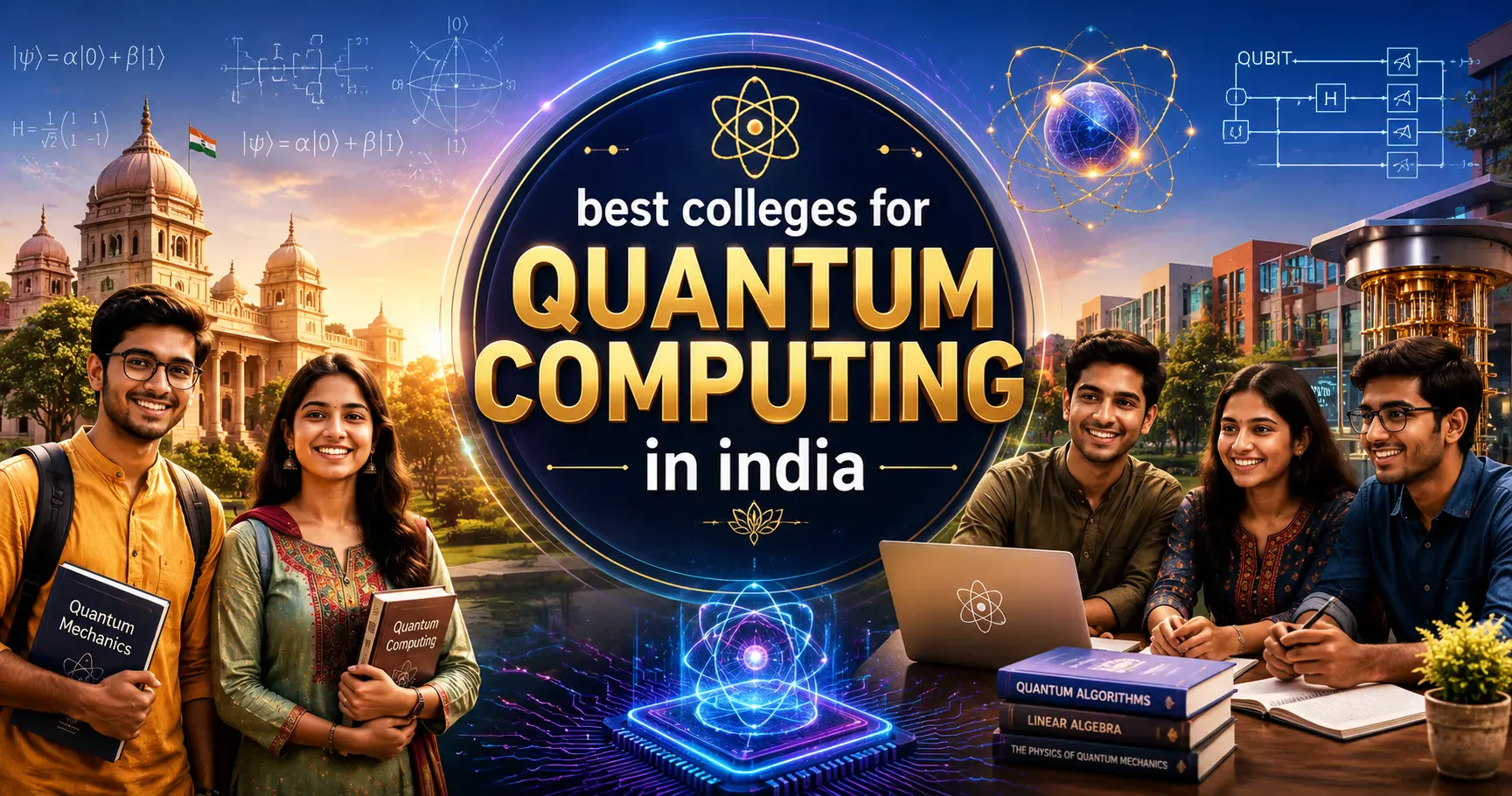
Quantum computing is no longer a futuristic concept discussed only in research laboratories. Today, it is becoming one of the most exciting and high-potential technology fields in the world. From artificial intelligence and cybersecurity to drug discovery and financial modeling, quantum computing is expected to transform multiple industries over the coming decades.
As a result, many students are actively searching for the best colleges for quantum computing in India. Parents are equally interested because they want their children to enter a future-proof career with strong research opportunities and global demand.
Many parents feel anxious about choosing a new-age field because information is often scattered across different websites. Students often wonder whether quantum computing is a good career option, which colleges offer the best programs, and whether placements are available after graduation.
From our years of guiding students at CollegeZollege, we have noticed a growing interest in emerging technology programs. We have helped hundreds of students choose the right college and university based on their interests, academic background, budget, and long-term career goals.
India is gradually becoming a major player in quantum technology. Government initiatives, research funding, industry partnerships, and collaborations with international institutions are creating exciting opportunities for students who want to build careers in this field.
According to industry data, quantum computing is expected to generate thousands of high-paying jobs worldwide over the next decade. Therefore, choosing the right institution today can significantly impact a student’s future success.
Before selecting a college, students should evaluate several factors:
- Faculty expertise
- Research infrastructure
- Industry collaborations
- Internship opportunities
- Placement support
- Campus environment
- Academic flexibility
- Global partnerships
Moreover, accreditation and rankings play an important role. Students can review institutional rankings through the official National Institutional Ranking Framework (NIRF) at NIRF India.
📸 Image Placement


Quantum Computing in India: Current Growth Scenario
India’s quantum ecosystem is growing rapidly. The government launched the National Quantum Mission to accelerate research and innovation across multiple sectors.
Several leading institutions are now offering:
- Quantum Computing
- Quantum Information Science
- Quantum Technologies
- Quantum Communication
- Quantum Cryptography
- Quantum Machine Learning
Students can pursue these specializations through:
| Program Type | Duration |
|---|---|
| B.Tech | 4 Years |
| B.Sc | 3 Years |
| M.Tech | 2 Years |
| M.Sc | 2 Years |
| PhD | 3-6 Years |
| Integrated Programs | 5 Years |
Additionally, many universities are introducing interdisciplinary programs combining:
- Physics
- Computer Science
- Mathematics
- Artificial Intelligence
- Electronics Engineering
This combination helps students develop both theoretical and practical skills.
Why choose this college/university?
When evaluating the best colleges for quantum computing in India, students should focus on institutions that provide a strong balance between academics, research, and industry exposure.
The field itself is highly specialized. Therefore, colleges with advanced laboratories and experienced faculty offer a significant advantage.
Key Benefits of Studying Quantum Computing
1. Future-Proof Career
Quantum technology is expected to influence multiple industries, including:
- Healthcare
- Banking
- Aerospace
- Cybersecurity
- Defense
- Artificial Intelligence
As these sectors expand their quantum initiatives, demand for skilled professionals is likely to increase substantially.
2. High Research Opportunities
Unlike many traditional degree programs, quantum computing provides direct exposure to cutting-edge research.
Students often participate in:
- Research projects
- Innovation labs
- National missions
- International collaborations
3. Excellent Global Demand
Countries including:
- United States
- Canada
- Germany
- United Kingdom
- Singapore
- Australia
are investing heavily in quantum technologies.
Consequently, graduates may find opportunities across international markets.
4. Interdisciplinary Learning
Quantum computing combines multiple disciplines.
Students gain expertise in:
| Subject | Importance |
|---|---|
| Physics | Core Concepts |
| Mathematics | Algorithms |
| Computer Science | Programming |
| Electronics | Hardware Understanding |
| AI | Future Applications |
This broad knowledge base creates multiple career pathways.
5. Innovation-Focused Environment
Many top institutions encourage:
- Startups
- Patent development
- Research publications
- Technology innovation
As a trusted education platform, CollegeZollege.com always guides parents with transparent information about these opportunities.
Top Institutions Offering Quantum Computing Opportunities in India
The following institutions are widely recognized for quantum research, computing infrastructure, and advanced technology programs.
| Rank | Institution | Location | Strength |
|---|---|---|---|
| 1 | IISc Bangalore | Bengaluru | Quantum Research |
| 2 | IIT Madras | Chennai | Quantum Technologies |
| 3 | IIT Bombay | Mumbai | Quantum Algorithms |
| 4 | IIT Delhi | Delhi | Quantum Information |
| 5 | IIT Kanpur | Kanpur | Advanced Research |
| 6 | IIT Hyderabad | Hyderabad | Emerging Technologies |
| 7 | IISER Pune | Pune | Quantum Physics |
| 8 | IISER Kolkata | Kolkata | Quantum Science |
| 9 | IIIT Hyderabad | Hyderabad | Quantum AI Research |
| 10 | CMI Chennai | Chennai | Mathematical Foundations |
Bengaluru’s Growing Role in Quantum Computing
Bengaluru continues to lead India’s technology ecosystem.
The city offers:
- Research institutes
- Technology startups
- Global IT companies
- Innovation hubs
- Deep-tech incubators
Students who prefer Karnataka often explore institutions listed in our detailed guide to Bengaluru colleges available at https://collegezollege.com/top-colleges-in-bangalore/.
Additionally, students interested in understanding broader higher education options may benefit from reviewing https://collegezollege.com/bangalore-colleges-guide-/ while comparing technology-focused programs.
Based on real student feedback, Bengaluru’s ecosystem provides strong internship exposure and networking opportunities compared with many other cities.
📸 Image Placement


Courses offered
The best colleges for quantum computing in India generally offer programs through engineering, science, and research departments.
Undergraduate Programs
Students after Class 12 can pursue:
B.Tech in Computer Science with Quantum Computing Specialization
This program combines:
- Programming
- Quantum Algorithms
- Data Structures
- Machine Learning
- Quantum Information
B.Tech in Quantum Technologies
A relatively new program focusing entirely on:
- Quantum Hardware
- Quantum Software
- Quantum Networks
B.Sc Physics with Quantum Computing Modules
Suitable for students interested in research-oriented careers.
Integrated B.Sc + M.Sc Programs
These programs offer long-term specialization and research opportunities.
Postgraduate Programs
M.Tech in Quantum Technology
Core subjects include:
| Subject | Focus Area |
|---|---|
| Quantum Mechanics | Theory |
| Quantum Algorithms | Computation |
| Quantum Communication | Networking |
| Quantum Hardware | Devices |
| Quantum Cryptography | Security |
M.Sc Quantum Science
Ideal for students planning careers in:
- Research
- Academia
- Laboratories
- Government Projects
Integrated Research Programs
Many leading institutions allow students to enter research pathways early.
Doctoral Programs
PhD opportunities are available in:
- Quantum Information Science
- Quantum Materials
- Quantum Communication
- Quantum Hardware
- Quantum Computing Applications
These programs often include funded research assistantships.
Core Subjects Students Study
Students enrolled in quantum-focused programs typically study:
| Semester Subjects |
|---|
| Quantum Mechanics |
| Linear Algebra |
| Probability Theory |
| Computer Programming |
| Quantum Algorithms |
| Quantum Communication |
| Quantum Hardware Systems |
| Quantum Error Correction |
| Artificial Intelligence |
| Machine Learning |
This curriculum prepares students for both research and industry careers.
Skills Developed During the Course
Students graduate with expertise in:
Technical Skills
- Python Programming
- Quantum Programming
- Data Analysis
- Algorithm Design
- AI Integration
Analytical Skills
- Problem Solving
- Critical Thinking
- Mathematical Modeling
Professional Skills
- Team Collaboration
- Research Writing
- Technical Communication
These competencies are highly valued by employers worldwide.
Emerging Specializations
The quantum field continues to evolve rapidly.
Students may encounter specializations such as:
- Quantum Machine Learning
- Quantum Cryptography
- Quantum Software Engineering
- Quantum Hardware Engineering
- Quantum Networking
- Quantum Information Processing
Therefore, students should compare curriculum details carefully before selecting a university.
Choosing the Right Program
Students often wonder whether they should choose engineering or science pathways.
The answer depends on career goals.
| Career Goal | Recommended Program |
|---|---|
| Software Development | B.Tech |
| Research Scientist | B.Sc + M.Sc |
| Quantum Hardware | B.Tech Electronics |
| Academia | PhD |
| AI + Quantum | B.Tech CSE |
| Government Research | M.Sc / PhD |
We have helped hundreds of students choose the right college by evaluating these factors individually rather than relying solely on rankings.
Quick Checklist Before Selecting a Quantum Computing College
✅ Strong research faculty
✅ Advanced laboratory facilities
✅ Internship opportunities
✅ Industry collaborations
✅ Research publications
✅ Placement assistance
✅ Accredited institution
✅ Affordable fee structure
✅ Student support services
✅ Modern campus infrastructure
Ready to take the next step? Fill out our Free Admission Guidance Form and one of our senior counselors from CollegeZollege will call you the same day with personalised support.
Fee structure
Choosing among the best colleges for quantum computing in India is not only about rankings and research facilities. Cost plays an equally important role. Every year, many parents contact education counselors because they want clarity regarding tuition fees, hostel charges, scholarships, and additional academic expenses.
Many parents feel anxious about rising education costs. However, the good news is that students interested in quantum computing can choose from a wide range of institutions, including government-funded universities, IITs, IISERs, and private universities.
The overall fee depends on:
- Institution type
- Degree level
- Hostel requirements
- Scholarship eligibility
- Research facilities
- International collaborations
Based on real student feedback, government institutions continue to provide the best return on investment for quantum-related education.
📸 Quantum Research Facilities


Estimated Annual Fee Structure
| Institution Type | Tuition Fee Per Year |
|---|---|
| IITs | ₹2,00,000 – ₹3,50,000 |
| IISc Bangalore | ₹30,000 – ₹1,50,000 |
| IISERs | ₹40,000 – ₹1,20,000 |
| Central Universities | ₹20,000 – ₹1,00,000 |
| Private Universities | ₹2,50,000 – ₹8,00,000 |
| International Collaborative Programs | ₹4,00,000 – ₹12,00,000 |
Students should remember that fee structures may change annually.
Estimated Total Cost of Education
| Expense Category | Approximate Cost |
|---|---|
| Tuition Fees | ₹1 Lakh – ₹15 Lakhs |
| Hostel Fees | ₹40,000 – ₹2 Lakhs |
| Food & Mess | ₹25,000 – ₹80,000 |
| Books & Resources | ₹10,000 – ₹40,000 |
| Laptop & Software | ₹50,000 – ₹1.5 Lakhs |
| Research Projects | ₹5,000 – ₹50,000 |
Government Institutions vs Private Universities
Government Institutions
Advantages:
✅ Lower fees
✅ Strong faculty
✅ National recognition
✅ Better research opportunities
✅ Higher ROI
Challenges:
- Highly competitive admissions
- Limited seats
- Entrance examination pressure
Private Universities
Advantages:
✅ Modern infrastructure
✅ Flexible curriculum
✅ Industry collaborations
✅ International exposure
Challenges:
- Higher fees
- Varying placement quality
Scholarships Available
Students pursuing quantum computing programs can access various scholarships.
Central Government Scholarships
- NSP Scholarships
- Merit-Based Scholarships
- Research Fellowships
- Minority Scholarships
Institution-Specific Scholarships
Many universities offer:
| Scholarship Type | Benefit |
|---|---|
| Merit Scholarship | 25–100% Fee Waiver |
| Sports Scholarship | Partial Fee Waiver |
| Research Scholarship | Stipend Support |
| Need-Based Scholarship | Financial Assistance |
Return on Investment (ROI)
When evaluating the best colleges for quantum computing in India, ROI is one of the most important factors.
| Institution Category | Average ROI |
|---|---|
| IITs | Excellent |
| IISc Bangalore | Excellent |
| IISERs | Very Good |
| Top Private Universities | Good |
| Tier-2 Colleges | Moderate |
Students who pursue higher studies or research careers often experience even greater long-term returns.
Admission process
Admission procedures vary significantly across institutions.
Some colleges offer direct admission through merit, while premier institutions require entrance examinations.
Students often wonder whether quantum computing requires a dedicated entrance exam. In most cases, admission occurs through engineering, science, or technology admission pathways.
General Admission Flow
Application Submission
          ↓
Entrance Examination
          ↓
Result Declaration
          ↓
Counselling Process
          ↓
Document Verification
          ↓
Fee Payment
          ↓
Admission Confirmation
Admission Through JEE
Most IIT-based quantum technology programs accept:
- JEE Main
- JEE Advanced
Admission is based on:
- Rank
- Seat availability
- Category reservation
- Counselling outcomes
Admission Through IISER Aptitude Test
IISER institutions generally consider:
- IISER Aptitude Test
- National-level eligibility pathways
Students interested in research-oriented careers frequently choose this route.
University-Specific Entrance Exams
Some private universities conduct their own examinations.
Examples include:
| Admission Mode | Accepted By |
|---|---|
| University Entrance Test | Private Universities |
| Merit Admission | Selected Colleges |
| National Entrance Exam | Premier Institutions |
| Interview Process | Research Programs |
Step-by-Step Admission Guidance
Step 1: Research Programs
Compare:
- Curriculum
- Faculty
- Labs
- Placements
- Scholarships
Students can also explore broader higher education opportunities through https://collegezollege.com/how-to-choose-the-right-college-in-bangalore/ for structured college selection strategies.
Step 2: Check Eligibility
Every institution publishes eligibility criteria separately.
Review:
- Academic requirements
- Entrance requirements
- Age criteria
- Subject combinations
Step 3: Apply Early
Many students miss opportunities simply because they apply late.
Therefore:
✅ Track application dates
✅ Monitor counselling schedules
✅ Keep documents ready
Documents Required
| Document | Mandatory |
|---|---|
| Class 10 Marksheet | Yes |
| Class 12 Marksheet | Yes |
| Transfer Certificate | Yes |
| Community Certificate | If Applicable |
| Passport Size Photos | Yes |
| Entrance Scorecard | Yes |
| Aadhaar Card | Yes |
📸 Admission Counselling & Campus Selection


Common Mistakes During Admission
Many students lose admission opportunities due to avoidable mistakes.
Avoid:
❌ Missing deadlines
❌ Ignoring scholarship applications
❌ Selecting colleges only based on advertisements
❌ Not reviewing placement records
❌ Ignoring faculty quality
❌ Choosing solely based on fee structure
From our years of guiding students at CollegeZollege, we have observed that students who evaluate academics, placements, and research opportunities together generally make better long-term decisions.
Eligibility criteria
Eligibility requirements differ based on the program level.
Eligibility for B.Tech Programs
Students typically require:
| Requirement | Criteria |
|---|---|
| Class 12 | Passed |
| Physics | Mandatory |
| Mathematics | Mandatory |
| Chemistry | Usually Required |
| Minimum Percentage | 60–75% |
| Entrance Exam | Required in Most Cases |
Eligibility for B.Sc Programs
Generally includes:
- Class 12 completion
- Science stream background
- Mathematics proficiency
Some institutions may require entrance examinations.
Eligibility for M.Tech Programs
Requirements often include:
| Criteria | Requirement |
|---|---|
| Bachelor’s Degree | Required |
| Engineering Background | Preferred |
| Minimum Marks | 55–65% |
| Entrance Test | Often Required |
Eligibility for M.Sc Programs
Students generally need:
- B.Sc Physics
- Mathematics
- Computer Science
- Related disciplines
Eligibility for PhD Programs
Candidates usually require:
- Master’s Degree
- Research Proposal
- Interview Performance
- Academic Excellence
Preferred Academic Background
The strongest candidates generally have experience in:
| Subject | Importance |
|---|---|
| Mathematics | Very High |
| Physics | Very High |
| Programming | High |
| Electronics | Moderate |
| AI & Data Science | High |
Important Skills for Success
Students entering quantum computing programs should ideally possess:
Mathematical Skills
- Calculus
- Linear Algebra
- Probability
Programming Skills
- Python
- C++
- Data Structures
Research Skills
- Scientific Thinking
- Problem Solving
- Data Interpretation
Academic Preparation Checklist
Before applying to the best colleges for quantum computing in India, students should ensure they have:
✅ Strong Mathematics foundation
✅ Good Physics understanding
✅ Basic Programming knowledge
✅ Competitive entrance preparation
✅ Research interest
✅ Long-term career vision
Ready to take the next step? Fill out our Free Admission Guidance Form and one of our senior counselors from CollegeZollege will call you the same day with personalised support.
Placement & career outcomes
For most students and parents, placements are one of the biggest factors when evaluating the best colleges for quantum computing in India. While quantum computing is still an emerging field compared to traditional software engineering, the career opportunities are growing rapidly.
Students often wonder whether quantum computing graduates can secure jobs immediately after graduation. The answer depends on the institution, skill level, internships, and specialization chosen during the course.
Many quantum computing graduates pursue careers in:
- Quantum Software Development
- Quantum Research
- Artificial Intelligence
- Machine Learning
- Data Science
- Cybersecurity
- Scientific Computing
- Advanced Analytics
- Semiconductor Research
- Academic Research
As quantum technology continues to mature, demand for specialized talent is expected to increase significantly.
📸 Quantum Technology Careers & Research


Why Recruiters Value Quantum Computing Graduates
Quantum computing students develop skills that are highly transferable.
Employers appreciate candidates who understand:
| Skill Area | Industry Relevance |
|---|---|
| Mathematics | High |
| Programming | High |
| Problem Solving | Very High |
| Research | Very High |
| AI Integration | High |
| Data Analysis | High |
Consequently, graduates are often considered suitable for multiple technology roles.
Major Career Paths After Graduation
1. Quantum Software Engineer
Responsibilities include:
- Developing quantum algorithms
- Testing quantum applications
- Optimizing computational processes
Average Salary:
₹8 LPA – ₹30 LPA+
2. Quantum Research Scientist
Researchers work in:
- National laboratories
- Research institutions
- Universities
- Global technology companies
Average Salary:
₹10 LPA – ₹40 LPA+
3. Quantum Machine Learning Specialist
This emerging role combines:
- Artificial Intelligence
- Quantum Algorithms
- Data Science
Average Salary:
₹12 LPA – ₹45 LPA+
4. Quantum Hardware Engineer
Focus Areas:
- Quantum devices
- Chip architecture
- Hardware optimization
Average Salary:
₹10 LPA – ₹35 LPA+
5. Cybersecurity Specialist
Quantum-safe security is becoming a major industry requirement.
Professionals work on:
- Cryptography
- Security protocols
- Advanced encryption
Average Salary:
₹8 LPA – ₹30 LPA+
Salary Expectations
Entry-Level Salaries
| Qualification | Average Package |
|---|---|
| B.Tech | ₹6–12 LPA |
| B.Sc | ₹4–8 LPA |
| M.Tech | ₹8–18 LPA |
| M.Sc | ₹6–15 LPA |
| PhD | ₹12–30 LPA |
Mid-Career Salaries
| Experience | Expected Salary |
|---|---|
| 3–5 Years | ₹15–35 LPA |
| 5–10 Years | ₹25–60 LPA |
| 10+ Years | ₹50 LPA+ |
Top Recruiters
Several global organizations are investing heavily in quantum technologies.
Technology Companies
- IBM
- Microsoft
- Intel
- Amazon
Research Organizations
- DRDO
- ISRO
- CSIR
- National Research Labs
Startups
India’s quantum startup ecosystem is expanding rapidly.
Students increasingly receive opportunities from:
- Deep-tech startups
- AI companies
- Semiconductor firms
- Research-driven enterprises
Internship Opportunities
Internships provide practical exposure that significantly improves employability.
Students should aim for internships in:
| Sector | Opportunity |
|---|---|
| Quantum Labs | Research |
| AI Companies | Development |
| Universities | Projects |
| Startups | Innovation |
| Government Labs | Research Assistance |
Industry Trends Supporting Quantum Careers
According to industry experts:
✅ Quantum technology investment is increasing
✅ Governments worldwide are funding research
✅ Demand for skilled professionals is growing
✅ Universities are expanding quantum programs
✅ New startups are entering the ecosystem
These factors create a positive outlook for students.
Placement Comparison Across Institution Types
| Institution Type | Placement Strength |
|---|---|
| IITs | Excellent |
| IISc Bangalore | Excellent |
| IISERs | Very Good |
| IIITs | Very Good |
| Top Private Universities | Good |
| Tier-2 Institutions | Moderate |
Higher Education Opportunities
Many students continue their education after graduation.
Popular destinations include:
- United States
- Canada
- Germany
- United Kingdom
- Singapore
- Australia
Advanced degrees often improve research opportunities and salary potential.
Campus & facilities
The learning environment significantly influences student development.
When evaluating the best colleges for quantum computing in India, students should carefully examine infrastructure and campus resources.
Modern quantum education requires more than classrooms. Research exposure, computing facilities, faculty interaction, and innovation ecosystems are equally important.
📸 Advanced Campus Infrastructure


Essential Facilities Students Should Look For
Research Laboratories
Quantum-focused institutions often maintain:
- Advanced Physics Labs
- Computing Centers
- AI Laboratories
- Research Clusters
High-Performance Computing Infrastructure
Students require access to:
| Facility | Importance |
|---|---|
| Computing Servers | High |
| Simulation Software | High |
| Research Databases | High |
| Programming Platforms | High |
Libraries
Top institutions maintain extensive collections covering:
- Physics
- Mathematics
- Computer Science
- Engineering
- Artificial Intelligence
Many libraries also provide digital journal access.
Innovation Centers
Innovation ecosystems help students transform ideas into real-world solutions.
Features often include:
- Startup incubation
- Patent assistance
- Industry mentorship
- Research grants
Hostel Facilities
Parents frequently prioritize safety and comfort.
Important considerations include:
✅ Security
✅ Clean accommodation
✅ Internet access
✅ Study spaces
✅ Dining facilities
Sports & Recreation
A balanced student life contributes to better academic performance.
Many leading institutions offer:
- Indoor sports
- Outdoor sports
- Fitness centers
- Cultural clubs
Campus Facilities Checklist
| Facility | Importance |
|---|---|
| Quantum Labs | Essential |
| Computing Centers | Essential |
| Hostel | Important |
| Library | Essential |
| Innovation Hub | High |
| Sports Facilities | Moderate |
| Student Clubs | High |
Research Ecosystem
Research culture differentiates leading institutions from average colleges.
Students should review:
- Faculty publications
- Research grants
- Patents
- Industry collaborations
As a trusted education platform, CollegeZollege.com always encourages students to evaluate research output before making a final decision.
Student life & culture
Academic excellence is important. However, campus culture also plays a major role in shaping a student’s future.
Students spend several years at a university. Therefore, the environment should encourage growth, confidence, and personal development.
📸 Student Life & Campus Experience


Academic Culture
The best colleges for quantum computing in India typically encourage:
- Independent learning
- Research participation
- Faculty interaction
- Innovation projects
Students benefit from exposure to diverse perspectives and collaborative learning environments.
Student Clubs
Popular clubs include:
| Club Type | Benefits |
|---|---|
| Coding Club | Technical Skills |
| Robotics Club | Innovation |
| Research Club | Academic Growth |
| Entrepreneurship Club | Startup Exposure |
| Cultural Club | Personality Development |
Technical Festivals
Students often participate in:
- Hackathons
- Coding Competitions
- Research Conferences
- Innovation Challenges
These activities enhance practical skills and professional networking.
Bengaluru Advantage
Students studying in Bengaluru benefit from proximity to:
- IT companies
- Research organizations
- Startup ecosystems
- Innovation hubs
Those exploring broader educational opportunities can review https://collegezollege.com/top-private-colleges-in-bangalore/ and https://collegezollege.com/bangalore-university-colleges/ for additional insights into Karnataka’s higher education ecosystem.
Based on real student feedback, Bengaluru remains one of India’s most attractive cities for technology-focused education.
Diversity & Inclusion
Top institutions attract students from:
- Different states
- Diverse academic backgrounds
- Multiple cultures
This diversity enhances learning and communication skills.
Student Support Services
Strong institutions provide:
✅ Academic counseling
✅ Career guidance
✅ Mental wellness support
✅ Internship assistance
✅ Placement training
Building a Long-Term Career
Success in quantum computing requires:
- Strong academics
- Research participation
- Internship experience
- Technical skills
- Continuous learning
Students who actively engage with campus opportunities generally achieve stronger outcomes after graduation.
Ready to take the next step? Fill out our Free Admission Guidance Form and one of our senior counselors from CollegeZollege will call you the same day with personalised support.
Alternative options
While many students specifically search for the best colleges for quantum computing in India, it is important to understand that quantum computing is still a specialized and evolving field. Therefore, students should also consider related programs that provide strong foundations in computing, mathematics, electronics, and artificial intelligence.
From our years of guiding students at CollegeZollege, we have seen many successful professionals enter quantum computing through alternative academic pathways. In fact, several leading quantum researchers originally studied Computer Science, Physics, Electronics Engineering, or Mathematics before specializing later.
Consequently, students should focus on building strong fundamentals rather than worrying exclusively about a program title.
📸 Alternative Technology Programs


Best Alternative Degrees for Quantum Computing Aspirants
Computer Science Engineering (CSE)
Computer Science remains one of the strongest pathways into quantum computing.
Students gain expertise in:
- Programming
- Algorithms
- Data Structures
- Artificial Intelligence
- Machine Learning
These skills translate effectively into quantum software development.
Physics
Quantum computing originates from quantum mechanics.
Students who pursue Physics gain:
- Theoretical foundations
- Research exposure
- Advanced mathematical skills
Many leading quantum researchers worldwide come from physics backgrounds.
Electronics & Communication Engineering
Quantum hardware development requires extensive electronics expertise.
Students learn:
- Semiconductor Technology
- Communication Systems
- Embedded Systems
- Signal Processing
Artificial Intelligence & Machine Learning
Quantum AI is emerging as a major interdisciplinary field.
Students interested in future technologies may find this combination particularly valuable.
Mathematics
Quantum algorithms rely heavily on mathematics.
A strong mathematical foundation can lead to:
- Research careers
- Algorithm development
- Academic positions
Comparison Table: Alternative Programs
| Program | Quantum Research | Industry Jobs | Higher Studies |
|---|---|---|---|
| Quantum Computing | Excellent | Good | Excellent |
| Computer Science | Good | Excellent | Very Good |
| Physics | Excellent | Moderate | Excellent |
| Electronics | Good | Excellent | Good |
| AI & ML | Good | Excellent | Good |
| Mathematics | Excellent | Moderate | Excellent |
Quantum Computing vs Artificial Intelligence
Students frequently compare these two emerging fields.
| Factor | Quantum Computing | Artificial Intelligence |
|---|---|---|
| Industry Maturity | Emerging | Established |
| Job Availability | Growing | Very High |
| Research Opportunities | Very High | High |
| Global Demand | Growing Rapidly | Very High |
| Salary Potential | Excellent | Excellent |
| Learning Curve | High | Moderate |
Students who enjoy research and mathematics often prefer quantum computing. On the other hand, those interested in immediate industry opportunities may find AI more accessible.
Quantum Computing vs Data Science
| Factor | Quantum Computing | Data Science |
|---|---|---|
| Research Focus | High | Moderate |
| Industry Demand | Growing | Strong |
| Programming Requirement | High | High |
| Mathematics Level | Very High | Moderate |
| Future Potential | Exceptional | Excellent |
Both fields offer promising career opportunities.
Quantum Computing vs Cybersecurity
| Factor | Quantum Computing | Cybersecurity |
|---|---|---|
| Future Growth | Excellent | Excellent |
| Research Intensity | High | Moderate |
| Government Demand | High | High |
| Global Opportunities | Strong | Strong |
Quantum-safe cybersecurity is expected to become increasingly important.
Colleges Offering Strong Related Programs
Students who cannot secure admission to specialized quantum programs may consider institutions offering excellent foundations in:
- Computer Science
- Physics
- Electronics
- Artificial Intelligence
For students exploring additional options in Karnataka, resources such as https://collegezollege.com/naac-a-colleges/ and https://collegezollege.com/sindhi-college/ can help broaden the search process.
Similarly, students comparing highly rated institutions may find useful insights through https://collegezollege.com/top-colleges-in-bangalore/ while evaluating alternative pathways.
FAQs (15 Questions)
1. Is quantum computing a good career in India?
Yes. Quantum computing is emerging rapidly and offers excellent research, academic, and industry opportunities.
2. Which is the best college for quantum computing in India?
Institutions such as IISc Bangalore, IIT Madras, IIT Bombay, IIT Delhi, and IISERs are among the strongest options.
3. Can I study quantum computing after Class 12?
Yes. Students can pursue B.Tech, B.Sc, or integrated programs that include quantum computing specializations.
4. Is Mathematics important for quantum computing?
Yes. Mathematics forms the foundation of quantum algorithms and quantum information theory.
5. Is Physics compulsory?
For most programs, Physics is highly important because quantum computing is based on quantum mechanics.
6. What entrance exam is required?
Many institutions consider:
- JEE Main
- JEE Advanced
- IISER Aptitude Test
- University-specific examinations
7. What is the average salary after graduation?
Entry-level salaries often range from ₹6 LPA to ₹12 LPA, depending on skills and institution.
8. Are placements available in India?
Yes. Opportunities are growing in research organizations, technology companies, startups, and government laboratories.
9. Can quantum computing graduates work abroad?
Absolutely. Countries worldwide are investing heavily in quantum technology and actively recruit qualified professionals.
10. Is coding required?
Yes. Programming skills are important for quantum algorithm development and software applications.
11. Which programming language is commonly used?
Python is widely used in quantum computing education and research.
12. Is quantum computing better than AI?
Both fields offer excellent opportunities. The better choice depends on individual interests and career goals.
13. Can Computer Science students enter quantum computing later?
Yes. Many professionals transition into quantum computing after completing Computer Science degrees.
14. Are scholarships available?
Yes. Government, institutional, and merit-based scholarships are available at many universities.
15. Is quantum computing suitable for research careers?
Yes. It is one of the most research-intensive and innovation-driven technology fields available today.
Final Thoughts / Key Takeaway / Final Perspective
The future of technology is increasingly connected to quantum innovation, advanced computing, artificial intelligence, and scientific research. Therefore, students exploring the best colleges for quantum computing in India are positioning themselves at the forefront of one of the world’s most transformative technological revolutions.
Many parents feel anxious about investing in an emerging field. That concern is understandable. However, the reality is that quantum technology is receiving significant support from governments, universities, and industry leaders across the globe. As investment grows, the need for skilled professionals will continue to increase.
Students often wonder whether they should choose a dedicated quantum computing program or pursue a related field such as Computer Science, Physics, Electronics, or Artificial Intelligence. In many cases, both pathways can lead to successful careers if students build strong foundations and remain committed to continuous learning.
Based on real student feedback, institutions that combine research excellence, modern infrastructure, industry collaboration, and strong faculty support consistently produce the best outcomes. Therefore, applicants should evaluate colleges holistically rather than focusing exclusively on rankings.
As a trusted education platform, CollegeZollege.com always encourages students and parents to review accreditation, placement records, research opportunities, faculty expertise, campus culture, and affordability before making a final decision. Students should also verify institutional recognition through official bodies such as the University Grants Commission at UGC India.
The coming decade is expected to create exciting opportunities in quantum software, quantum communication, quantum cryptography, semiconductor research, machine learning, and advanced scientific computing. Students who prepare today can become the innovators, researchers, and technology leaders of tomorrow.
Seats for best colleges for quantum computing in india are filling rapidly, and if you want priority support, simply submit the form below — our expert team will help you secure admission with zero hidden charges.