

Introduction
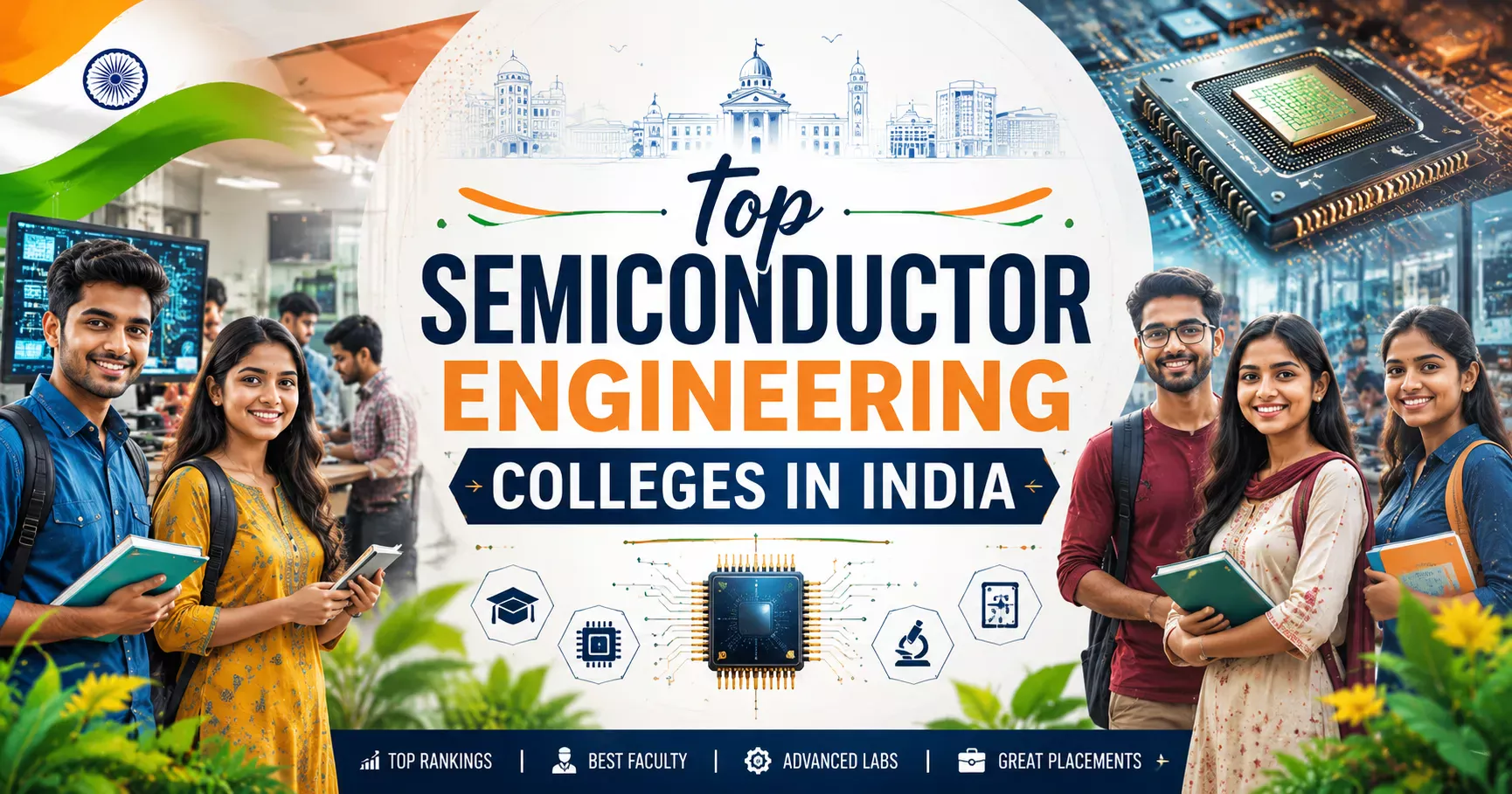
The semiconductor industry is rapidly transforming the future of technology. From smartphones and laptops to electric vehicles, aerospace systems, medical devices, and artificial intelligence platforms, every modern innovation depends on advanced semiconductor chips. Behind these chips are highly skilled VLSI engineers who design, test, and optimize integrated circuits that power the digital world.
As India strengthens its position in the global semiconductor ecosystem, the demand for skilled VLSI professionals is increasing significantly. Government initiatives, semiconductor manufacturing investments, and global companies expanding operations in India have created exciting opportunities for students pursuing careers in chip design and embedded electronics.
Because of this growing demand, many students and parents are actively searching for the best colleges for VLSI design in India. However, choosing the right institution requires careful evaluation of faculty quality, industry collaborations, laboratory infrastructure, placement support, curriculum relevance, research opportunities, and overall student development.
Many parents feel anxious about investing in engineering education because they want assurance that their child will secure strong career opportunities after graduation. Students often wonder whether VLSI specialization offers better prospects than traditional electronics programs. These concerns are completely understandable.
From our years of guiding students at CollegeZollege, we have observed that students who select colleges with strong semiconductor industry connections often enjoy better internship opportunities, stronger placement outcomes, and enhanced practical exposure.
India’s semiconductor ecosystem is expanding across cities such as Bangalore, Hyderabad, Chennai, Pune, Noida, and Gurgaon. Therefore, selecting the right college can significantly influence a student’s professional journey.
This comprehensive guide explores the best colleges for VLSI design in India, admission procedures, fee structures, placement records, student experiences, campus facilities, and future career opportunities.
Best Colleges for VLSI Design in India – Quick Overview
| Rank | College | Location | Type | NAAC Grade |
|---|---|---|---|---|
| 1 | IIT Madras | Chennai | Government | A++ |
| 2 | IIT Bombay | Mumbai | Government | A++ |
| 3 | IIT Delhi | New Delhi | Government | A++ |
| 4 | IIT Kanpur | Kanpur | Government | A++ |
| 5 | IIT Kharagpur | Kharagpur | Government | A++ |
| 6 | IISc Bangalore | Bangalore | Government | A++ |
| 7 | BITS Pilani | Pilani | Private | A++ |
| 8 | IIIT Hyderabad | Hyderabad | Private | A++ |
| 9 | VIT Vellore | Vellore | Private | A++ |
| 10 | SRM Institute | Chennai | Private | A++ |
| 11 | Manipal Institute of Technology | Manipal | Private | A+ |
| 12 | PES University | Bangalore | Private | A+ |
| 13 | RV College of Engineering | Bangalore | Private | A+ |
| 14 | MS Ramaiah Institute of Technology | Bangalore | Private | A+ |
| 15 | Dayananda Sagar University | Bangalore | Private | A+ |
According to the official NIRF rankings, institutions such as IITs, IISc Bangalore, and several leading private universities consistently perform well in engineering education and research. NIRF India Rankings
Why Choose This College/University?
Choosing among the best colleges for VLSI design in India requires understanding what differentiates top institutions from average engineering colleges.
Key Factors That Matter
✅ Semiconductor-focused curriculum
✅ Modern VLSI design laboratories
✅ Industry-sponsored research projects
✅ Internship opportunities
✅ Strong placement network
✅ Faculty with semiconductor expertise
✅ Access to EDA tools
✅ Research publications
✅ Global collaborations
Why Bangalore Holds Special Importance
Bangalore is often called India’s Silicon Valley. Major semiconductor and chip design companies have established significant operations in the city.
These include:
- Intel
- Qualcomm
- NVIDIA
- Texas Instruments
- Synopsys
- AMD
- Broadcom
- Samsung Semiconductor
- NXP
- MediaTek
Students studying in Bangalore benefit from proximity to these companies. Internship opportunities become more accessible, industry guest lectures occur frequently, and placement interactions remain strong throughout the academic year.
Students interested in Bangalore-based opportunities can also explore this detailed guide on top engineering institutions:
https://collegezollege.com/top-colleges-in-bangalore/


Courses Offered
Most institutions offering VLSI education provide programs at undergraduate, postgraduate, diploma, and research levels.
Undergraduate Programs
B.Tech Electronics and Communication Engineering
This remains the most common pathway into VLSI.
Core subjects include:
- Digital Electronics
- Analog Circuits
- Microprocessors
- Embedded Systems
- CMOS Design
- Semiconductor Physics
B.Tech Electronics Engineering
Focus areas include:
- VLSI Fundamentals
- Signal Processing
- Integrated Circuits
- Communication Systems
B.Tech Electronics and VLSI Design
Several universities now offer dedicated VLSI specializations.
Postgraduate Programs
M.Tech VLSI Design
Popular among students seeking specialized semiconductor careers.
Subjects include:
| Subject | Focus Area |
|---|---|
| CMOS Design | Chip Architecture |
| ASIC Design | Semiconductor Manufacturing |
| FPGA Design | Hardware Verification |
| Physical Design | Chip Layout |
| Verification Engineering | Testing & Validation |
M.Tech Microelectronics
Advanced semiconductor engineering specialization.
M.Tech Nanoelectronics
Emerging specialization aligned with advanced semiconductor manufacturing.
Doctoral Programs
PhD opportunities exist in:
- VLSI Design
- Nanoelectronics
- Semiconductor Technology
- Embedded Systems
- AI Hardware Acceleration
Students interested in accredited institutions can review:
https://collegezollege.com/naac-a-colleges/
Fee Structure
Fees vary significantly between government and private institutions.
Government Colleges
| College | Approx Annual Fee |
|---|---|
| IIT Madras | ₹2–2.5 Lakhs |
| IIT Bombay | ₹2–2.5 Lakhs |
| IIT Delhi | ₹2–2.5 Lakhs |
| IIT Kanpur | ₹2–2.5 Lakhs |
| IISc Bangalore | ₹30,000–₹60,000 |
Private Universities
| College | Annual Fee |
|---|---|
| BITS Pilani | ₹5–7 Lakhs |
| VIT Vellore | ₹2–4 Lakhs |
| SRM University | ₹2.5–5 Lakhs |
| PES University | ₹4–5 Lakhs |
| Manipal Institute | ₹4–6 Lakhs |
Apart from tuition, students should consider:
- Hostel expenses
- Examination fees
- Laboratory charges
- Software licensing fees
- Project expenses
Many institutions offer scholarships based on merit and entrance examination performance.
Admission Process
Admission procedures differ across institutions.
Through JEE Advanced
Required for:
- IITs
- IISc Bangalore (certain programs)
Steps
- Clear JEE Main
- Qualify JEE Advanced
- Participate in JoSAA Counselling
- Seat Allotment
- Document Verification
Through JEE Main
Accepted by:
- IIITs
- NITs
- Several private universities
University Entrance Exams
Examples include:
| University | Entrance Exam |
|---|---|
| BITS Pilani | BITSAT |
| VIT | VITEEE |
| SRM | SRMJEEE |
| PES | PESSAT |
Direct Admissions
Certain private universities provide management quota admissions.
Students should carefully evaluate accreditation status before making decisions. Official quality benchmarks can be verified through:
NAAC Accreditation Portal
Eligibility Criteria
Undergraduate Eligibility
- 10+2 completion
- Physics compulsory
- Mathematics compulsory
- Chemistry preferred
- Minimum 50–75% marks depending on institution
Postgraduate Eligibility
- B.Tech/B.E.
- Electronics background preferred
- Valid GATE score for many institutions
PhD Eligibility
- M.Tech/M.E.
- Research proposal
- Written test and interview
Placement & Career Outcomes


The strongest reason students pursue VLSI education is the promising career outlook.
Top Recruiters
| Company | Hiring Area |
|---|---|
| Intel | Chip Design |
| Qualcomm | VLSI Verification |
| NVIDIA | GPU Design |
| AMD | Processor Architecture |
| Broadcom | ASIC Development |
| Samsung | Semiconductor Design |
| Synopsys | EDA Tools |
| Cadence | Design Automation |
| MediaTek | Mobile Chipsets |
| Texas Instruments | Embedded Hardware |
Salary Expectations
| Experience | Average Package |
|---|---|
| Fresher | ₹5–12 LPA |
| 2–5 Years | ₹10–25 LPA |
| 5–10 Years | ₹20–45 LPA |
| Senior Roles | ₹50 LPA+ |
Top IIT graduates occasionally secure international packages exceeding ₹1 crore annually.
Ready to take the next step? Fill out our Free Admission Guidance Form and one of our senior counselors from CollegeZollege will call you the same day with personalised support.
Campus & Facilities


When evaluating the best colleges for VLSI design in India, infrastructure plays a crucial role. A strong VLSI program requires much more than classrooms and textbooks. Students need access to sophisticated software tools, simulation platforms, fabrication exposure, research facilities, and industry-grade laboratories.
Based on real student feedback, institutions that invest consistently in laboratory modernization tend to produce graduates who adapt quickly to industry environments.
Many parents focus primarily on rankings. However, practical infrastructure often influences employability more directly than ranking numbers alone.
Essential Facilities Every VLSI Student Should Look For
| Facility | Importance |
|---|---|
| VLSI Design Lab | Core practical learning |
| FPGA Laboratory | Hardware implementation |
| Embedded Systems Lab | System integration skills |
| Digital Electronics Lab | Circuit understanding |
| CAD Design Center | Chip architecture practice |
| Semiconductor Research Center | Advanced project exposure |
| High-Speed Computing Labs | Simulation and verification |
| Innovation Centers | Startup and research support |
Software Tools Available in Top Colleges
Leading colleges provide access to professional Electronic Design Automation (EDA) tools.
Common tools include:
- Cadence Virtuoso
- Synopsys Design Compiler
- Mentor Graphics
- Xilinx Vivado
- MATLAB
- Tanner EDA
- ModelSim
- Verilog Simulation Tools
These platforms help students learn actual industry workflows.
Students often wonder whether theoretical knowledge alone is enough. Unfortunately, it is not. Semiconductor companies increasingly prioritize hands-on project experience.
Therefore, colleges that offer practical exposure usually generate stronger placement outcomes.
Infrastructure Comparison of Leading Colleges
| College | Research Labs | Industry Tools | Innovation Centers |
|---|---|---|---|
| IIT Madras | Excellent | Excellent | Excellent |
| IISc Bangalore | Excellent | Excellent | Excellent |
| IIT Bombay | Excellent | Excellent | Very Good |
| IIIT Hyderabad | Very Good | Excellent | Very Good |
| BITS Pilani | Very Good | Very Good | Very Good |
| RV College Bangalore | Good | Very Good | Good |
| PES University | Good | Good | Good |
| VIT Vellore | Very Good | Very Good | Very Good |
| SRM University | Good | Good | Good |
Why Bangalore Offers an Advantage
Bangalore continues to dominate India’s semiconductor ecosystem.
Companies regularly collaborate with colleges for:
- Guest lectures
- Research projects
- Industry certifications
- Sponsored laboratories
- Internship opportunities
Students exploring Bangalore options can review detailed institution comparisons through:
Additionally, students seeking quality private institutions often compare programs available through:
Student Life & Culture


Student life extends far beyond academics.
A successful VLSI engineer needs technical skills, communication abilities, leadership qualities, teamwork experience, and professional confidence.
Therefore, campus culture becomes an important consideration.
Many students feel nervous about moving away from home for the first time. Parents often worry about safety, support systems, and student wellbeing.
From our years of guiding students at CollegeZollege, we have noticed that students adjust more comfortably when colleges maintain vibrant communities and strong mentorship programs.
Academic Culture
Top VLSI-focused institutions encourage:
- Research participation
- Technical competitions
- Semiconductor workshops
- Hackathons
- Design challenges
- Industry certifications
Students frequently participate in:
- FPGA competitions
- Robotics projects
- Embedded system contests
- Chip design simulations
These activities strengthen resumes significantly.
Student Clubs
Most leading colleges host:
| Club Type | Benefits |
|---|---|
| Robotics Club | Hardware development |
| Electronics Club | Circuit design |
| Coding Club | Programming skills |
| Innovation Cell | Startup exposure |
| IEEE Student Chapter | Professional networking |
| Research Forums | Publication opportunities |
Hostel Life
Hostel experiences differ across institutions.
Most premier colleges provide:
✓ Wi-Fi enabled campuses
✓ Reading rooms
✓ Indoor sports
✓ Cafeterias
✓ Medical facilities
✓ Security systems
✓ Recreation centers
Students often develop lifelong friendships through hostel communities.
Cultural Activities
Strong engineering education should not eliminate creativity.
Leading institutions organize:
- Annual fests
- Cultural celebrations
- Technical symposiums
- Entrepreneurship events
- Industry conclaves
- Alumni interactions
These experiences contribute significantly to personality development.
Detailed Analysis of Top Colleges
1. IIT Madras


Highlights
| Feature | Details |
|---|---|
| Location | Chennai |
| Type | Government |
| Accreditation | NAAC A++ |
| NIRF Standing | Consistently among top institutions |
| VLSI Strength | Excellent |
Why Students Prefer IIT Madras
IIT Madras possesses one of India’s strongest semiconductor research ecosystems.
Advantages include:
- Advanced research centers
- International collaborations
- Semiconductor fabrication exposure
- Strong alumni network
Placement Strength
Top recruiters include:
- Intel
- Qualcomm
- NVIDIA
- Samsung
- AMD
Average salaries remain among the highest in India.
2. IISc Bangalore


IISc Bangalore represents India’s premier research institution.
Students interested in advanced semiconductor research often prioritize IISc because of:
- World-class faculty
- Research-driven curriculum
- Industry-sponsored projects
- Exceptional postgraduate opportunities
Bangalore’s semiconductor ecosystem further strengthens career prospects.
3. IIT Bombay
Key Advantages
- Strong microelectronics department
- Industry partnerships
- Global collaborations
- High placement packages
Students pursuing VLSI specialization gain access to advanced laboratory resources and research mentorship.
4. IIT Delhi
Strengths
| Area | Rating |
|---|---|
| Research | Excellent |
| Faculty | Excellent |
| Placements | Excellent |
| Industry Exposure | Excellent |
The institution maintains strong relationships with semiconductor employers.
5. IIT Kanpur
Known for:
- Research excellence
- Strong electronics department
- Advanced laboratories
- Industry projects
Many graduates enter semiconductor R&D roles.
6. IIIT Hyderabad
One of the strongest choices for students focused on electronics and semiconductor design.
Benefits
✓ Research-intensive culture
✓ Industry collaborations
✓ Strong placements
✓ Modern laboratories
7. BITS Pilani
BITS Pilani combines academic rigor with flexibility.
Students appreciate:
- Practice School internships
- Industry exposure
- Strong alumni network
- Global recognition
8. VIT Vellore
VIT continues attracting students nationwide because of:
- Modern infrastructure
- Strong placement support
- Industry partnerships
- Active student community
9. SRM Institute of Science and Technology
SRM offers:
- Dedicated electronics programs
- Good industry connections
- Large campus ecosystem
- Research opportunities
10. RV College of Engineering, Bangalore
Students frequently shortlist RVCE when searching for the best colleges for VLSI design in India.
Advantages include:
- Strong placement record
- Bangalore location advantage
- Industry interaction
- Excellent alumni network
Students considering Bangalore institutions may also explore:
Industry Trends Driving VLSI Careers


The future of VLSI careers looks exceptionally promising.
Several global trends are accelerating demand.
Artificial Intelligence
AI processors require specialized semiconductor architectures.
This creates demand for:
- Chip designers
- Verification engineers
- Hardware architects
Electric Vehicles
Modern EVs contain thousands of semiconductor components.
Therefore, automotive electronics companies are hiring VLSI professionals aggressively.
5G Technology
Telecommunications expansion increases demand for:
- RF engineers
- Chip designers
- Verification specialists
Data Centers
Cloud computing growth continues creating semiconductor opportunities worldwide.
Semiconductor Manufacturing in India
Government initiatives have attracted significant investments into semiconductor manufacturing and design.
According to official government and industry announcements, India is actively building a stronger semiconductor ecosystem, creating long-term career opportunities for engineering graduates.
Skills Needed for VLSI Careers
Employers increasingly seek graduates who combine technical expertise with problem-solving abilities.
Technical Skills
| Skill | Importance |
|---|---|
| Verilog | Very High |
| VHDL | High |
| FPGA Design | Very High |
| CMOS Design | Very High |
| ASIC Design | High |
| Python | Medium |
| C Programming | High |
| Linux | High |
Soft Skills
Equally important skills include:
- Communication
- Teamwork
- Leadership
- Presentation skills
- Project management
- Analytical thinking
Students who develop both technical and professional skills generally experience stronger placement outcomes.
How to Choose the Right College
Many parents feel overwhelmed when comparing dozens of colleges.
Instead of focusing only on rankings, consider these factors:
Selection Checklist
✓ Accreditation
✓ Placement record
✓ Faculty quality
✓ Industry tie-ups
✓ Research output
✓ Laboratory facilities
✓ Alumni network
✓ Internship opportunities
✓ Campus safety
✓ Student support systems
Families seeking additional admission guidance may find this resource useful:
Alternative Options


Not every student secures admission into an IIT, IISc, or other highly competitive institutions. Fortunately, several excellent alternatives can still provide strong VLSI education, industry exposure, and promising placement opportunities.
From our years of guiding students at CollegeZollege, we have seen many successful semiconductor professionals graduate from colleges that may not appear at the very top of national rankings. What matters most is the combination of student effort, practical projects, internships, and industry-relevant skills.
Students often wonder whether missing admission to a premier institute means missing a successful career. The answer is absolutely not. Semiconductor companies evaluate technical skills, project portfolios, and problem-solving abilities alongside academic credentials.
Strong Alternative Colleges for VLSI Design
| College | City | Key Strength |
|---|---|---|
| RV College of Engineering | Bangalore | Excellent placements |
| BMS College of Engineering | Bangalore | Strong industry links |
| MS Ramaiah Institute of Technology | Bangalore | Semiconductor exposure |
| PES University | Bangalore | Industry collaboration |
| Dayananda Sagar University | Bangalore | Modern infrastructure |
| New Horizon College of Engineering | Bangalore | Electronics specialization |
| Amrita Vishwa Vidyapeetham | Coimbatore | Research ecosystem |
| SASTRA University | Thanjavur | Strong ECE programs |
| Thiagarajar College of Engineering | Madurai | Academic excellence |
| SSN College of Engineering | Chennai | Industry partnerships |
Students interested in Bangalore’s engineering ecosystem can also review:
Bangalore’s Growing Semiconductor Advantage


Bangalore continues to attract major semiconductor investments.
Several global organizations operate large engineering centers in the city.
These include:
- Intel
- Qualcomm
- NVIDIA
- AMD
- Broadcom
- Synopsys
- Cadence
- NXP
- Samsung Semiconductor
Because of this ecosystem, students studying in Bangalore often gain:
- Better internship opportunities
- More industry interactions
- Greater networking possibilities
- Exposure to real-world semiconductor projects
Many parents specifically prefer Bangalore because graduates frequently find employment without relocating immediately after graduation.
Students evaluating Bangalore institutions can explore:
Future Scope of VLSI Design in India
The future for students pursuing VLSI education appears highly encouraging.
According to industry reports and semiconductor investment announcements, India is becoming an increasingly important destination for chip design, semiconductor research, packaging, testing, and manufacturing activities.
Emerging Career Domains
| Domain | Growth Potential |
|---|---|
| AI Hardware | Very High |
| Automotive Electronics | Very High |
| Semiconductor Manufacturing | Very High |
| Embedded Systems | High |
| IoT Devices | High |
| FPGA Development | High |
| ASIC Design | Very High |
| Chip Verification | Very High |
| Hardware Security | High |
| Quantum Computing Hardware | Emerging |
As semiconductor complexity increases, skilled engineers will remain in strong demand.
Career Roles After VLSI Education
Students graduating from the best colleges for VLSI design in India frequently enter positions such as:
Design Engineer
Responsible for chip architecture and logic development.
Verification Engineer
Validates chip functionality before production.
Physical Design Engineer
Focuses on chip layout and optimization.
FPGA Engineer
Develops programmable hardware systems.
Embedded Systems Engineer
Works on hardware-software integration.
Semiconductor Research Engineer
Participates in advanced technology development.
ASIC Engineer
Designs application-specific integrated circuits.
EDA Tool Engineer
Supports software platforms used in chip development.
Student Success Strategy
Students who achieve outstanding placement results often follow a structured development path.
Recommended Four-Year Roadmap
First Year
✓ Programming fundamentals
✓ Electronics basics
✓ Mathematics strengthening
✓ Technical club participation
Second Year
✓ Digital electronics
✓ Mini projects
✓ Verilog learning
✓ FPGA exposure
Third Year
✓ VLSI specialization
✓ Industry certifications
✓ Internships
✓ Research participation
Fourth Year
✓ Advanced projects
✓ Placement preparation
✓ Industry networking
✓ Technical interviews
Certifications That Add Value
| Certification Area | Industry Relevance |
|---|---|
| VLSI Design | Excellent |
| FPGA Programming | Excellent |
| Embedded Systems | High |
| Semiconductor Testing | High |
| ASIC Verification | Excellent |
| Python Programming | High |
| Linux Administration | Medium |
| Machine Learning Hardware | Emerging |
Frequently Asked Questions (FAQs)
1. Which is the best college for VLSI design in India?
IIT Madras, IISc Bangalore, IIT Bombay, IIT Delhi, and IIIT Hyderabad are widely considered among the best colleges for VLSI design in India due to strong research infrastructure, faculty expertise, and placement outcomes.
2. Is VLSI a good career in India?
Yes. The semiconductor industry is expanding rapidly, creating significant demand for VLSI engineers across chip design, verification, testing, embedded systems, and semiconductor manufacturing.
3. What salary can a VLSI engineer earn as a fresher?
Fresh graduates typically receive packages ranging from ₹5 LPA to ₹12 LPA. Graduates from premier institutions may receive substantially higher offers.
4. Which city is best for VLSI jobs in India?
Bangalore remains the leading destination due to its concentration of semiconductor companies. Hyderabad, Chennai, Pune, Noida, and Gurgaon are also important hubs.
5. Is VLSI harder than software engineering?
Both fields require dedication. VLSI involves electronics, semiconductor concepts, hardware design, and verification, while software engineering focuses on programming and software development.
6. Which branch is best for entering VLSI?
Electronics and Communication Engineering (ECE) remains the most common pathway into VLSI careers.
7. Can computer science students enter VLSI?
Yes. However, electronics students generally possess stronger hardware foundations, which may provide an advantage.
8. What entrance exams are required?
Common exams include:
- JEE Main
- JEE Advanced
- BITSAT
- VITEEE
- SRMJEEE
- GATE (for M.Tech)
9. Does VLSI have opportunities abroad?
Yes. Semiconductor companies operate globally, creating opportunities in the United States, Europe, Singapore, Taiwan, South Korea, Japan, and several other countries.
10. Is M.Tech necessary for VLSI careers?
Not always. Many students secure strong placements after B.Tech. However, M.Tech can improve specialization and research opportunities.
11. Which companies hire VLSI graduates?
Major recruiters include:
- Intel
- Qualcomm
- NVIDIA
- AMD
- Samsung
- Broadcom
- Synopsys
- Cadence
- Texas Instruments
- MediaTek
12. What programming languages are useful in VLSI?
Useful languages include:
- Verilog
- SystemVerilog
- VHDL
- Python
- C
- C++
13. Can VLSI engineers work in AI companies?
Yes. AI hardware development increasingly requires semiconductor specialists.
14. Are internships important in VLSI?
Absolutely. Practical exposure often improves placement opportunities and technical competence significantly.
15. How do I choose among the best colleges for VLSI design in India?
Evaluate:
- Accreditation
- Faculty quality
- Laboratory infrastructure
- Placement outcomes
- Industry collaborations
- Research opportunities
- Location advantages
- Student support systems
Final Thoughts / Key Takeaway / Final Perspective


Choosing among the best colleges for VLSI design in India is one of the most important academic decisions a student can make. The semiconductor industry is entering an exciting growth phase, and skilled professionals are expected to remain in strong demand for years to come.
Many parents feel anxious about selecting the right institution because engineering education represents a significant investment of time, effort, and financial resources. Those concerns are understandable. However, students who focus on learning, project development, internships, and industry-relevant skills often create successful careers regardless of where they begin.
Based on real student feedback, institutions such as IIT Madras, IISc Bangalore, IIT Bombay, IIT Delhi, IIIT Hyderabad, BITS Pilani, VIT Vellore, RV College of Engineering, PES University, and several leading private universities continue to provide excellent opportunities for aspiring semiconductor engineers.
As a trusted education platform, CollegeZollege.com always encourages students to evaluate colleges holistically rather than relying solely on rankings. Laboratory quality, industry exposure, placement support, faculty expertise, and student development opportunities all play vital roles in long-term success.
We have helped hundreds of students choose the right college, and one lesson remains consistent: students who combine strong academics with practical experience are the ones who thrive in the semiconductor industry.
Seats for best colleges for vlsi design in india are filling rapidly, and if you want priority support, simply submit the form below — our expert team will help you secure admission with zero hidden charges.