Introduction
Choosing the right engineering college is one of the most important decisions in a student’s life. Among all engineering branches, Civil Engineering continues to remain one of the most respected and career-oriented fields in India. From designing highways and smart cities to constructing airports, bridges, metro systems, and sustainable infrastructure, civil engineers play a major role in shaping the future of society.
When students begin searching for the best civil engineering colleges in bangalore, they often encounter hundreds of options, rankings, advertisements, and conflicting information. As a result, selecting the right institution can feel overwhelming. Many parents feel anxious about investing significant time and money without knowing whether a college will truly support their child’s career goals.
Students often wonder whether they should prioritize placements, faculty quality, infrastructure, fees, location, accreditation, or industry exposure. The reality is that all these factors matter. Therefore, choosing the right college requires a balanced evaluation.
From our years of guiding students at CollegeZollege, we have seen that students who carefully research colleges before admission generally experience better academic outcomes and greater career satisfaction. We have helped hundreds of students choose the right college based on their goals, financial situation, academic strengths, and future aspirations.
Bangalore, often called India’s Silicon Valley, is not only famous for IT companies and startups but also for its strong higher education ecosystem. The city hosts some of the country’s leading engineering institutions that offer excellent Civil Engineering programs supported by experienced faculty, modern laboratories, and strong industry connections.
As a trusted education platform, CollegeZollege.com always focuses on providing transparent information that helps students and parents make informed decisions. Based on real student feedback, industry trends, academic performance indicators, and infrastructure quality, Bangalore remains one of the most attractive destinations for Civil Engineering education in India.
Students exploring engineering options may also benefit from reviewing broader college comparisons available through this comprehensive guide to Bangalore colleges:
https://collegezollege.com/bangalore-colleges-guide-/
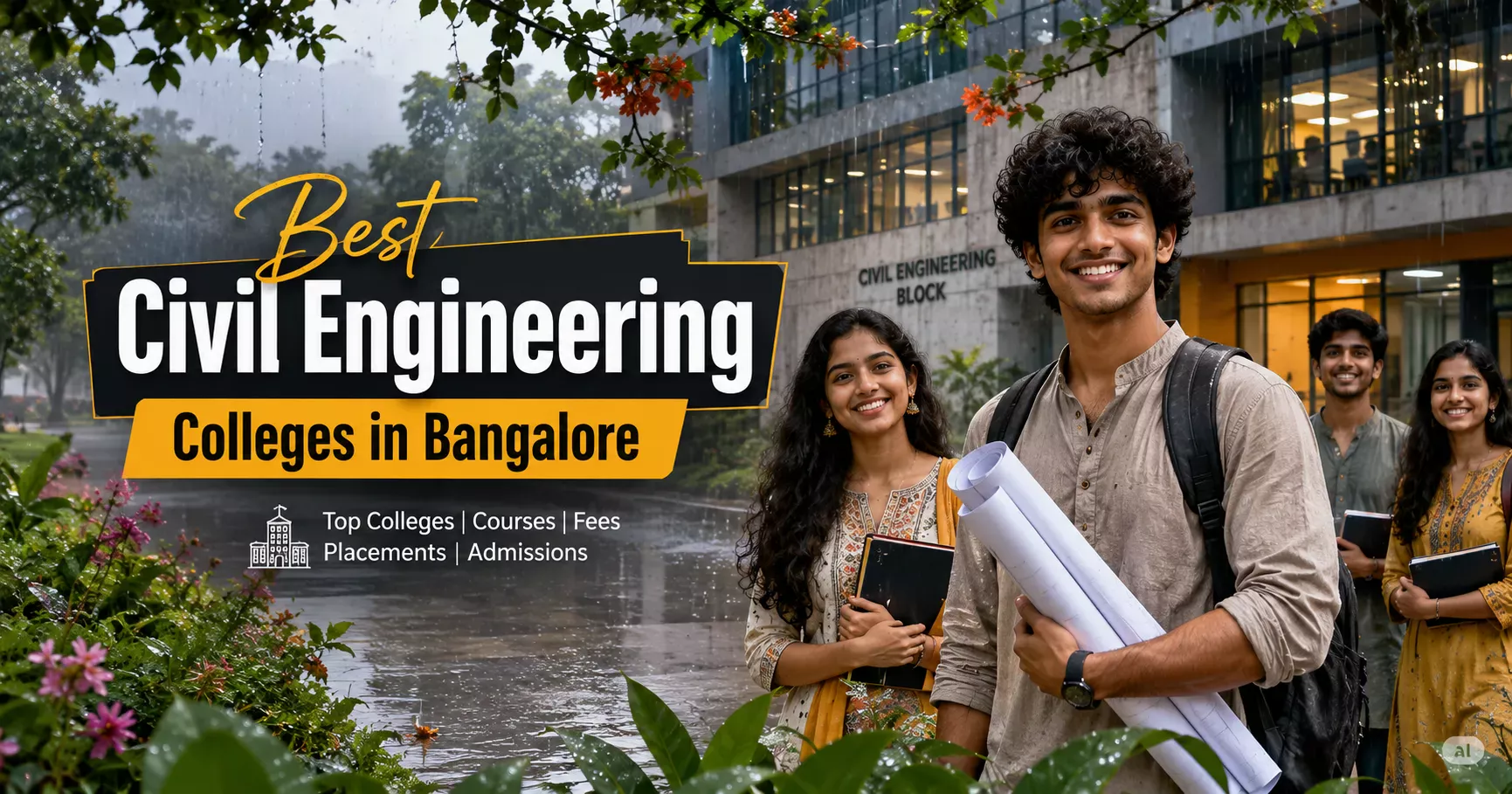
Image: Modern Civil Engineering Campus in Bangalore
Image Suggestion: Students working on structural models in a modern engineering laboratory with Bangalore city skyline in the background.
Why choose this college/university?
When discussing the best civil engineering colleges in bangalore, one important truth stands out: not every engineering college delivers the same educational experience.
A strong Civil Engineering college goes beyond classrooms and textbooks. It prepares students for real-world challenges, industry expectations, and technological advancements.
Bangalore’s Advantage for Civil Engineering Students
Bangalore offers a unique educational environment. Unlike many cities where engineering education remains mostly theoretical, Bangalore provides exposure to:
- Infrastructure development projects
- Smart city initiatives
- Metro rail expansion
- Sustainable construction technologies
- Real estate growth
- Transportation engineering projects
- Water resource management projects
As a result, students gain opportunities to observe practical engineering applications around them.
Furthermore, the city’s proximity to consulting firms, construction companies, government projects, and research organizations creates valuable learning opportunities.
Strong Academic Ecosystem
One major advantage of studying in Bangalore is access to institutions affiliated with reputed universities and approved by national regulatory bodies.
According to the official guidelines of the All India Council for Technical Education (AICTE), engineering institutions must maintain academic standards, infrastructure requirements, and faculty qualifications.
Similarly, accreditation and quality assessments conducted by National Assessment and Accreditation Council (NAAC) help students evaluate institutional quality.
Many leading Civil Engineering colleges in Bangalore hold strong accreditation profiles, providing greater confidence to students and parents.
Industry-Oriented Learning
Civil Engineering today is evolving rapidly.
Modern engineers must understand:
- Building Information Modeling (BIM)
- Smart infrastructure
- Green construction
- Sustainable design
- GIS technologies
- Structural analysis software
- Transportation planning
- Environmental engineering
The best institutions integrate these technologies into their curriculum.
Consequently, graduates become more employable and industry-ready.
Faculty Expertise
Experienced faculty members significantly influence student success.
Good Civil Engineering departments often include:
- PhD-qualified professors
- Industry consultants
- Research scholars
- Former government engineers
- Infrastructure specialists
These professionals bring valuable real-world perspectives into classrooms.
Therefore, students gain practical insights beyond theoretical concepts.
Research Opportunities
Many students initially believe research opportunities are only available in IITs or premier national institutions.
However, several Bangalore engineering colleges actively encourage:
- Undergraduate research projects
- Technical paper presentations
- Innovation competitions
- Consultancy projects
- Industry-sponsored research
Such experiences strengthen higher education applications and career prospects.
Infrastructure and Laboratories
Civil Engineering requires practical exposure.
Strong institutions invest in laboratories such as:
| Laboratory | Purpose |
|---|---|
| Structural Engineering Lab | Testing building materials |
| Surveying Lab | Land measurement techniques |
| Geotechnical Lab | Soil testing and analysis |
| Transportation Lab | Highway engineering studies |
| Environmental Lab | Water and air quality testing |
| Fluid Mechanics Lab | Hydraulic experimentation |
| Concrete Technology Lab | Construction material analysis |
Students receive hands-on training that improves technical understanding.
Better Career Opportunities
Employers often prefer graduates from reputed institutions because they trust the quality of education and practical training.
Top recruiters in Civil Engineering commonly include:
- Construction companies
- Infrastructure developers
- Government organizations
- Consulting firms
- Project management companies
- Urban planning agencies
As a result, students from recognized colleges frequently enjoy stronger placement opportunities.
Student Support Services
A quality institution supports students throughout their academic journey.
Important support systems include:
- Academic mentoring
- Career counseling
- Placement guidance
- Internship assistance
- Competitive exam coaching
- Entrepreneurship support
Many parents feel relieved when colleges provide structured support services.
Bangalore’s Student-Friendly Environment
Apart from academics, Bangalore offers a vibrant student life.
Students benefit from:
- Diverse cultural exposure
- Excellent public transportation
- Internship opportunities
- Technology ecosystem
- Professional networking events
- Affordable student communities
These factors contribute to personal growth alongside academic development.
Students exploring broader educational opportunities can also compare options through this detailed list of top colleges in Bangalore:
https://collegezollege.com/top-colleges-in-bangalore/
Why Civil Engineering Still Matters
Some students worry that Civil Engineering may not offer strong career opportunities compared to computer science or IT.
However, industry demand continues to remain strong.
Infrastructure development remains essential for:
- Urban expansion
- Transportation systems
- Smart cities
- Water management
- Renewable energy projects
- Housing development
According to industry data, India will continue investing heavily in infrastructure development over the coming decades. Therefore, qualified Civil Engineers are expected to remain highly relevant.
What Students Tell Us
Based on real student feedback, successful Civil Engineering students often share similar experiences:
✔ Strong practical training matters.
✔ Industry exposure improves confidence.
✔ Faculty support makes a difference.
✔ Internships provide valuable learning.
✔ Campus culture influences personal growth.
✔ Placement support creates career opportunities.
From our experience at CollegeZollege, students who select colleges based on long-term career fit rather than marketing advertisements generally report better outcomes.
Image: Civil Engineering Laboratory
Image Suggestion: Students performing concrete cube testing and structural load analysis in an engineering lab.
Courses offered
The best civil engineering colleges in bangalore typically provide a wide range of academic programs designed to support students at different stages of their educational journey.
While Bachelor of Engineering (B.E.) or Bachelor of Technology (B.Tech.) in Civil Engineering remains the most popular choice, many institutions also offer postgraduate and research opportunities.
Undergraduate Programs
The undergraduate Civil Engineering degree serves as the foundation for most engineering careers.
B.E. Civil Engineering
Duration: 4 Years
The program generally covers:
- Engineering Mathematics
- Engineering Mechanics
- Building Materials
- Structural Analysis
- Surveying
- Geotechnical Engineering
- Transportation Engineering
- Environmental Engineering
- Construction Management
- Hydraulics
- Water Resources Engineering
Students gradually progress from foundational engineering concepts to advanced design and project management topics.
Core Subjects Covered
The curriculum usually includes:
First Year
- Engineering Mathematics
- Engineering Physics
- Engineering Chemistry
- Basic Electronics
- Engineering Graphics
- Computer Programming
Second Year
- Strength of Materials
- Surveying
- Fluid Mechanics
- Engineering Geology
- Building Materials
- Concrete Technology
Third Year
- Structural Analysis
- Design of Structures
- Transportation Engineering
- Geotechnical Engineering
- Environmental Engineering
Fourth Year
- Construction Management
- Advanced Structural Design
- Water Resource Engineering
- Project Work
- Industrial Internship
Specialization Opportunities
Many colleges now offer elective specializations that allow students to develop expertise in emerging areas.
Popular options include:
Structural Engineering
Focus Areas:
- High-rise buildings
- Bridge design
- Earthquake-resistant structures
- Advanced structural analysis
Transportation Engineering
Focus Areas:
- Highway design
- Traffic management
- Urban transportation planning
- Smart mobility systems
Environmental Engineering
Focus Areas:
- Water treatment
- Waste management
- Air pollution control
- Sustainable development
Construction Technology
Focus Areas:
- Project management
- Building technology
- Construction planning
- Cost estimation
Geotechnical Engineering
Focus Areas:
- Soil mechanics
- Foundation engineering
- Ground improvement techniques
- Slope stability
Postgraduate Programs
Students interested in advanced technical expertise may pursue postgraduate studies.
M.Tech Structural Engineering
This specialization is ideal for students interested in advanced design and analysis.
Key subjects include:
- Finite Element Analysis
- Advanced Concrete Design
- Structural Dynamics
- Earthquake Engineering
M.Tech Transportation Engineering
Focuses on:
- Traffic systems
- Highway engineering
- Transportation planning
- Infrastructure development
M.Tech Environmental Engineering
Emphasizes:
- Sustainable infrastructure
- Environmental protection
- Resource management
- Pollution control
Doctoral Programs
Several leading institutions also offer PhD programs.
Research areas commonly include:
- Sustainable construction
- Smart infrastructure
- Green buildings
- Transportation systems
- Water resources
- Structural health monitoring
Industry-Relevant Skill Courses
Modern Civil Engineering education increasingly includes software training.
Students may gain exposure to:
- AutoCAD
- STAAD Pro
- ETABS
- Revit
- Primavera
- BIM Tools
- GIS Applications
These technical skills improve employability significantly.
Value-Added Certification Programs
Many colleges provide additional certifications in:
- Project Management
- Quantity Surveying
- Construction Planning
- Sustainable Design
- Building Information Modeling
Consequently, students graduate with stronger practical competencies.
Internship Opportunities
The best Civil Engineering colleges encourage internships throughout the academic journey.
Students often gain experience with:
- Construction companies
- Consulting firms
- Government projects
- Infrastructure developers
Such exposure bridges the gap between classroom learning and industry expectations.
Students interested in institutions with strong accreditation standards may also review this resource on NAAC-accredited colleges:
https://collegezollege.com/naac-a-colleges/
Emerging Areas in Civil Engineering
The field continues evolving rapidly.
Future-focused colleges increasingly include topics such as:
- Smart Cities
- Sustainable Infrastructure
- Green Building Design
- Digital Construction
- Urban Planning
- Renewable Energy Infrastructure
- Climate-Resilient Engineering
Therefore, students receive education aligned with future industry demands.
Skills Students Develop
A Civil Engineering degree develops multiple competencies.
These include:
Technical Skills
- Structural design
- Material analysis
- Surveying
- Construction planning
Analytical Skills
- Problem-solving
- Data interpretation
- Risk assessment
Management Skills
- Project coordination
- Team leadership
- Budget management
Communication Skills
- Technical reporting
- Client interactions
- Presentation abilities
Employers increasingly value graduates who possess both technical and interpersonal skills.
Choosing the Right Program
When evaluating the best civil engineering colleges in bangalore, students should consider:
✔ Curriculum quality
✔ Industry exposure
✔ Laboratory facilities
✔ Faculty expertise
✔ Placement support
✔ Internship opportunities
✔ Accreditation status
✔ Research opportunities
From our years of counseling students at CollegeZollege, we consistently observe that the most successful graduates select institutions that balance academic excellence with practical industry exposure.
Image: Civil Engineering Field Training
Image Suggestion: Engineering students conducting land surveying exercises using modern equipment on a Bangalore project site.
Fee structure
Understanding the fee structure is one of the most important steps when selecting among the best civil engineering colleges in bangalore.
Many families plan their finances years in advance to support higher education. Therefore, transparency regarding tuition fees, hostel expenses, examination charges, and additional costs becomes essential.
Students often focus only on tuition fees, but a complete financial evaluation should include all academic and living expenses. A well-informed decision helps families avoid unexpected financial pressure during the course duration.
Understanding Civil Engineering College Fees in Bangalore
Civil Engineering fees in Bangalore vary significantly depending on factors such as:
- Type of institution
- Government or private status
- Accreditation profile
- Infrastructure quality
- Campus facilities
- Placement performance
- University affiliation
As a result, annual fees can range from affordable government college rates to premium private institution costs.
Typical Fee Categories
Most engineering colleges divide fees into several components.
These may include:
| Fee Component | Purpose |
|---|---|
| Tuition Fee | Academic instruction |
| University Fee | Affiliation and examination charges |
| Laboratory Fee | Practical sessions and maintenance |
| Library Fee | Learning resources |
| Development Fee | Campus improvements |
| Hostel Fee | Accommodation |
| Transportation Fee | College bus services |
| Miscellaneous Charges | Student activities and services |
Understanding these categories helps students compare institutions more effectively.
Estimated Annual Fee Range
| Institution Type | Approximate Annual Fee |
|---|---|
| Government Colleges | ₹30,000 – ₹1,00,000 |
| Government-Aided Colleges | ₹60,000 – ₹1,50,000 |
| Private Colleges | ₹1,00,000 – ₹3,50,000 |
| Premium Private Institutions | ₹2,00,000 – ₹5,00,000+ |
Actual fees may vary based on admission quota, scholarship availability, and institutional policies.
Cost vs Value
Choosing a college solely because it has the lowest fee is not always the best decision.
Similarly, the most expensive college is not automatically the best.
Instead, families should evaluate:
- Faculty quality
- Placement support
- Infrastructure
- Accreditation
- Industry exposure
- Internship opportunities
A balanced assessment often produces better long-term outcomes.
Students researching private institutions may find this guide useful:
https://collegezollege.com/top-private-colleges-in-bangalore/
Scholarship Opportunities
Many Bangalore engineering colleges provide scholarships based on:
- Academic merit
- Entrance examination performance
- Economic background
- Reserved categories
- Sports achievements
Scholarships can significantly reduce the overall financial burden.
Education Loans
Most recognized engineering institutions support education loan applications through major banks.
Parents should review:
- Interest rates
- Repayment schedules
- Moratorium periods
- Processing fees
before finalizing any loan arrangement.
Hostel and Living Expenses
For students relocating to Bangalore, accommodation costs must also be considered.
Typical expenses may include:
- Hostel fees
- Food charges
- Internet access
- Transportation
- Study materials
- Personal expenses
Bangalore offers accommodation options across different budget levels, allowing students to choose according to their financial preferences.
Fee Structure
Understanding the fee structure is essential before making admission decisions.
Many families focus only on tuition fees. However, students should consider additional expenses such as hostel accommodation, transportation, examination fees, and study materials.
Average Civil Engineering Fee Structure in Bangalore
| College Category | Annual Fees |
|---|---|
| Government Colleges | ₹25,000 – ₹80,000 |
| Autonomous Colleges | ₹1.2 Lakh – ₹3 Lakh |
| Private Universities | ₹2 Lakh – ₹5 Lakh |
| Management Quota Seats | Higher Depending on Institution |
Additional Expenses
Hostel Fees
₹70,000 – ₹1.8 Lakh annually
Transportation
₹15,000 – ₹60,000 annually
Books and Materials
₹5,000 – ₹20,000 annually
Miscellaneous
₹10,000 – ₹30,000 annually
Scholarship Opportunities
Many colleges provide scholarships based on:
- Academic merit
- Sports achievements
- Financial need
- Government categories
- Minority status
Students should verify current scholarship availability directly from the institution.
Estimated Total Cost of Study
| Expense Category | Approximate Cost |
|---|---|
| Tuition | ₹4–12 Lakhs |
| Hostel | ₹3–7 Lakhs |
| Other Expenses | ₹1–2 Lakhs |
| Total Program Cost | ₹8–20 Lakhs |
Parents often appreciate institutions that provide transparent fee structures. We always guide parents with transparent information so that they can plan finances comfortably.
Students evaluating private institutions may also find useful insights through https://collegezollege.com/top-private-colleges-in-bangalore/ which discusses various private colleges in the city.
Admission Process
The admission process for the best civil engineering colleges in Bangalore generally follows a structured pathway.
Understanding each step helps students avoid last-minute confusion.
Step 1: Choose Preferred Colleges
Students should shortlist colleges based on:
- Accreditation
- Placements
- Faculty
- Infrastructure
- Fees
- Location
Step 2: Entrance Examination
Admissions are usually offered through:
KCET
Preferred for Karnataka students.
COMEDK
Popular among students from across India.
JEE Main
Accepted by selected institutions.
Institutional Admissions
Available in some private universities.
Step 3: Application Submission
Students submit:
- Academic records
- Entrance exam scores
- Identity documents
- Passport-size photographs
Step 4: Counseling Process
Qualified candidates participate in counseling rounds.
Seat allotment depends on:
- Rank
- Category
- Seat availability
- College preference
Step 5: Document Verification
Required documents generally include:
- 10th Marks Card
- 12th Marks Card
- Transfer Certificate
- Migration Certificate
- Entrance Rank Card
- Aadhaar Card
Step 6: Fee Payment
Admission is confirmed after fee payment and document verification.
Ready to take the next step? Fill out our Free Admission Guidance Form and one of our senior counselors from CollegeZollege will call you the same day with personalised support.
Image: Admission Counseling Session


Eligibility Criteria
Admission eligibility is straightforward for most civil engineering programs.
Undergraduate Eligibility
Students must have completed:
Academic Qualification
10+2 or equivalent
Required Subjects
- Physics
- Chemistry
- Mathematics
Minimum Marks
Generally 45–50% aggregate, depending on category and institution.
Lateral Entry Eligibility
Candidates should possess:
- Diploma in Engineering
- Recognized board approval
- Required minimum percentage
Postgraduate Eligibility
For M.Tech programs:
- B.E./B.Tech in Civil Engineering or related discipline
- Valid entrance examination score where applicable
Important Selection Factors
Many leading colleges evaluate:
- Entrance scores
- Academic consistency
- Counseling performance
- Seat availability
Students often worry about cut-offs. However, many excellent colleges offer opportunities across different rank ranges.
Based on real student feedback, selecting a college that matches both academic performance and career goals usually leads to better outcomes than focusing solely on rankings.
For students exploring institutions affiliated with Bangalore University, the guide available at https://collegezollege.com/bangalore-university-colleges/ provides additional information about affiliated colleges and academic opportunities.

Career opportunities for students graduating from the best civil engineering colleges in Bangalore.
Choosing among the best civil engineering colleges in Bangalore is not only about classrooms and laboratories. Placement opportunities play a major role in determining long-term career success.
Students invest four important years in engineering education. Therefore, understanding placement trends before taking admission is extremely important.
Many parents feel anxious about whether Civil Engineering still offers good career opportunities. Based on our counseling experience, the answer is yes. However, students must develop practical skills alongside academics.
The infrastructure sector in India continues to expand rapidly. New highways, airports, metro rail systems, smart city projects, industrial corridors, and urban development projects create demand for qualified civil engineers every year.
As a trusted education platform, CollegeZollege.com regularly interacts with students, recruiters, and industry professionals. One common observation is that employers increasingly prefer graduates who possess both technical knowledge and practical software skills.
Placement Trends in Civil Engineering
Civil Engineering placements have evolved significantly over the past decade.
Earlier, students primarily joined construction firms. Today, graduates work in multiple sectors.
Major Employment Areas
- Construction Companies
- Infrastructure Development
- Real Estate Projects
- Transportation Engineering
- Metro Rail Projects
- Environmental Consulting
- Structural Design Firms
- Government Departments
- Smart City Projects
- Water Resource Management
Consequently, career opportunities have become more diverse than ever before.
Average Placement Packages
The salary package depends on:
- College reputation
- Student skills
- Internship experience
- Communication abilities
- Software proficiency
- Industry demand
Typical Salary Range
| Category | Annual Package |
|---|---|
| Entry Level | ₹3 LPA – ₹5 LPA |
| Good Recruiters | ₹5 LPA – ₹8 LPA |
| Premium Recruiters | ₹8 LPA – ₹12 LPA |
| International Opportunities | Higher Packages |
Students who gain expertise in advanced design software often secure stronger placement outcomes.
Top Recruiters Visiting Bangalore Colleges
Several reputed organizations recruit Civil Engineering graduates.
Infrastructure Companies
- L&T Construction
- NCC Limited
- Shapoorji Pallonji
- Afcons Infrastructure
- Sobha Developers
- Brigade Group
Engineering Consultants
- Tata Consulting Engineers
- WSP India
- AECOM
- Jacobs Engineering
Government Sector Opportunities
- PWD
- CPWD
- NHAI
- Railways
- Metro Rail Corporations
Urban Development Projects
- Smart City Missions
- Municipal Corporations
- Environmental Agencies
Because Bangalore is an infrastructure-intensive city, students often gain exposure to these organizations through internships even before graduation.
Skills Recruiters Expect
Students often focus only on marks. However, employers now evaluate several additional skills.
Technical Skills
✔ AutoCAD
✔ STAAD Pro
✔ ETABS
✔ Revit
✔ BIM Technology
✔ Quantity Surveying
✔ Project Planning
Soft Skills
✔ Communication
✔ Teamwork
✔ Problem Solving
✔ Leadership
✔ Professional Ethics
✔ Presentation Skills
The best civil engineering colleges in Bangalore actively train students in both technical and professional competencies.
Higher Education Opportunities
Not every student enters the workforce immediately after graduation.
Many pursue higher education to specialize further.
Popular Choices
- M.Tech Structural Engineering
- M.Tech Transportation Engineering
- M.Tech Environmental Engineering
- MBA Construction Management
- MS Abroad
- Project Management Certifications
Students who develop strong academic foundations often gain admission to prestigious universities in India and abroad.
Government Exam Preparation
Another significant advantage of Bangalore colleges is competitive exam support.
Students prepare for:
- GATE
- UPSC Engineering Services
- Karnataka PWD Recruitment
- SSC JE
- RRB JE
- State Engineering Services
Several colleges conduct dedicated coaching sessions alongside regular academics.
Internship Opportunities
Internships have become essential.
According to industry data, students who complete multiple internships tend to secure better employment opportunities after graduation.
Common Internship Areas
- Site Engineering
- Structural Design
- Surveying
- Construction Management
- Project Planning
- Urban Development
Real-world exposure helps students understand industry expectations early.
Career Growth After Civil Engineering
Civil Engineering offers long-term growth potential.
Typical Career Progression
| Experience | Position |
|---|---|
| Fresher | Graduate Engineer Trainee |
| 2–5 Years | Site Engineer |
| 5–8 Years | Project Engineer |
| 8–12 Years | Project Manager |
| 12+ Years | Senior Manager / Consultant |
Many graduates eventually start their own consulting or construction firms.
This entrepreneurial pathway attracts ambitious students who want to create independent careers.
Image: Civil Engineering Career Opportunities


Campus & Facilities
The quality of campus infrastructure significantly affects the learning experience.
Fortunately, most of the best civil engineering colleges in Bangalore have invested heavily in modern facilities.
Students spend four years developing professional skills. Therefore, access to advanced laboratories and practical learning environments becomes essential.
Modern Laboratories
Civil Engineering education depends heavily on practical training.
Common Laboratories
- Survey Laboratory
- Geotechnical Laboratory
- Concrete Technology Laboratory
- Environmental Engineering Laboratory
- Fluid Mechanics Laboratory
- Transportation Engineering Laboratory
Students conduct experiments that strengthen classroom learning.
Smart Classrooms
Today’s engineering education goes beyond traditional blackboards.
Modern classrooms feature:
- Digital projectors
- Smart boards
- Interactive learning tools
- Virtual simulations
As a result, concepts become easier to understand.
Library Resources
Top colleges maintain extensive libraries.
Students gain access to:
- Reference books
- Technical journals
- Research papers
- Digital databases
- E-learning resources
Many institutions provide remote access to online learning materials.
Research Centers
Research opportunities have become increasingly important.
Students participate in projects involving:
- Sustainable construction
- Smart materials
- Green buildings
- Water conservation
- Transportation planning
These experiences enhance both academic and professional development.
Hostel Facilities
A large percentage of students come from outside Bangalore.
Therefore, hostel quality becomes a key factor.
Common Hostel Amenities
✔ Wi-Fi
✔ Security
✔ Study Rooms
✔ Dining Facilities
✔ Recreational Areas
✔ Medical Support
Parents often prioritize safe accommodation when selecting colleges.
Sports and Recreation
Engineering education can be demanding.
Consequently, recreational facilities play an important role.
Most colleges offer:
- Cricket grounds
- Football fields
- Basketball courts
- Indoor games
- Fitness centers
Balanced development contributes to student well-being.
Industry Collaboration Centers
Many leading colleges maintain dedicated industry collaboration departments.
These centers organize:
- Workshops
- Seminars
- Guest lectures
- Industry visits
- Certification programs
Students gain valuable professional exposure through such initiatives.
Transportation Facilities
Bangalore traffic can be challenging.
Therefore, many colleges operate transportation networks covering major city areas.
This service benefits both day scholars and parents concerned about commuting safety.
Innovation and Entrepreneurship Support
Modern engineering education encourages innovation.
Students receive support through:
- Startup incubation centers
- Innovation labs
- Entrepreneurship workshops
- Industry mentorship
Several successful startups have emerged from Bangalore engineering campuses.
Student Support Services
The best institutions understand that academic success requires emotional and professional support.
Students typically have access to:
- Career counseling
- Academic mentoring
- Placement guidance
- Mental wellness support
- Skill development programs
These services help students navigate college life more effectively.
Students seeking broader guidance on choosing the right institution can explore useful insights at https://collegezollege.com/how-to-choose-the-right-college-in-bangalore/.
Image: Engineering Campus Life


Student Life & Culture
Student life often becomes one of the most memorable parts of the engineering journey.
While academics remain important, personal growth also matters significantly.
The best civil engineering colleges in Bangalore provide opportunities for both professional and personal development.
Diverse Student Community
Bangalore attracts students from across India.
As a result, classrooms often include learners from:
- Karnataka
- Kerala
- Tamil Nadu
- Telangana
- Andhra Pradesh
- Maharashtra
- Delhi
- North-East India
Exposure to different cultures helps students become more adaptable and confident.
Technical Festivals
Technical events are a major attraction.
Students participate in:
- Engineering competitions
- Design challenges
- Project exhibitions
- Hackathons
- Innovation contests
These activities enhance practical learning.
Cultural Festivals
College life extends beyond academics.
Annual cultural events typically include:
- Music performances
- Dance competitions
- Fashion shows
- Literary activities
- Art exhibitions
Students build friendships and create lifelong memories during these celebrations.
Clubs and Student Organizations
Most campuses support numerous clubs.
Popular Student Clubs
- Civil Engineering Club
- Robotics Club
- Photography Club
- Literary Club
- Cultural Club
- Entrepreneurship Cell
Participation helps students discover new interests and talents.
Leadership Development
Employers increasingly seek leadership abilities.
Therefore, colleges encourage students to organize:
- Events
- Workshops
- Technical festivals
- Community programs
These experiences strengthen management skills.
Community Engagement
Many Civil Engineering students participate in social initiatives.
Examples include:
- Water conservation campaigns
- Environmental awareness programs
- Rural development projects
- Sustainable construction awareness
Such activities build social responsibility.
Student Feedback and Satisfaction
Based on real student feedback, colleges that maintain strong faculty-student interaction generally achieve higher satisfaction levels.
Students appreciate:
- Accessible professors
- Practical learning
- Industry exposure
- Supportive campus culture
From our years of guiding students at CollegeZollege, we have observed that campus culture often influences student success as much as academics.
Living in Bangalore as a Student
Bangalore remains one of India’s most student-friendly cities.
Advantages include:
- Pleasant weather
- Educational environment
- Professional networking
- Internship opportunities
- Diverse food options
- Modern infrastructure
Students often describe Bangalore as a city that supports both academic and personal growth.
Building a Professional Network
Networking begins during college itself.
Students connect with:
- Faculty members
- Alumni
- Industry experts
- Recruiters
- Fellow students
These relationships often create future career opportunities.
Preparing for Life After Graduation
College life is ultimately preparation for professional life.
Students develop:
- Technical expertise
- Professional communication
- Leadership abilities
- Time management
- Team collaboration
The combination of academics and extracurricular experiences creates well-rounded graduates ready for industry challenges.
Alternative Options

Students comparing colleges before choosing the best civil engineering colleges in Bangalore.
Selecting among the best civil engineering colleges in Bangalore is important, but students should also keep alternative options ready during counseling and admission rounds.
Many students focus only on one or two colleges. However, having a broader list increases the chances of securing admission in a quality institution.
From our years of guiding students at CollegeZollege, we always recommend creating three categories:
- Dream Colleges
- Target Colleges
- Safe Colleges
This strategy reduces stress and helps families make informed decisions.
Top Civil Engineering Colleges in Bangalore: Detailed Analysis
1. RV College of Engineering (RVCE)
RV College of Engineering is widely recognized as one of the most prestigious engineering institutions in Karnataka.
Highlights
- Established reputation
- Autonomous status
- Strong industry collaborations
- Excellent placement support
- Modern laboratories
Civil Engineering Strengths
The department focuses on:
- Structural Engineering
- Geotechnical Engineering
- Transportation Engineering
- Environmental Engineering
Students regularly participate in research projects and industrial training programs.
Approximate Fee Range
₹1.2–2.5 Lakhs per year (varies by quota)
Placement Outlook
Among the strongest in Bangalore engineering colleges.
Best For
Students seeking high academic standards and competitive career opportunities.
2. BMS College of Engineering
BMS College of Engineering has built a strong reputation over several decades.
Major Advantages
- Experienced faculty
- Strong alumni network
- Industry exposure
- Active student clubs
Civil Engineering Features
Students receive practical exposure through:
- Survey camps
- Industry visits
- Project-based learning
Fee Range
₹1–2.5 Lakhs annually
Career Prospects
Strong placement and higher education outcomes.
3. MS Ramaiah Institute of Technology
MSRIT remains one of the most preferred engineering colleges in Bangalore.
Key Benefits
- Excellent infrastructure
- Research opportunities
- Industry partnerships
- Urban campus location
Civil Engineering Facilities
- Structural labs
- Environmental engineering labs
- Advanced surveying equipment
Student Feedback
Students frequently appreciate faculty support and campus culture.
4. PES University
PES University has gained significant popularity among engineering aspirants.
Why Students Prefer PES
- Modern curriculum
- Industry-oriented training
- Strong innovation ecosystem
Civil Engineering Focus Areas
- Smart Infrastructure
- Sustainable Construction
- Urban Development
Placement Outlook
Consistently strong across engineering disciplines.
5. Dayananda Sagar College of Engineering
DSCE is known for its balanced approach to academics and extracurricular development.
Notable Strengths
- Large campus
- Strong laboratory facilities
- Active industry collaborations
Student Experience
Students often praise the vibrant campus atmosphere and professional development opportunities.
6. New Horizon College of Engineering
New Horizon continues to attract engineering students from multiple states.
Civil Engineering Advantages
- Industry interactions
- Professional certifications
- Practical project exposure
Facilities
- Advanced laboratories
- Modern classrooms
- Dedicated training centers
7. Nitte Meenakshi Institute of Technology
NMIT has steadily improved its academic reputation.
Department Features
- Qualified faculty
- Research opportunities
- Industry-oriented curriculum
Students gain exposure to emerging technologies used in modern construction projects.
8. CMR Institute of Technology
CMRIT provides a supportive learning environment.
Why Consider CMRIT?
- Student-friendly campus
- Industry partnerships
- Placement assistance
Civil Engineering Learning
Practical exposure remains a major strength of the department.
9. BNM Institute of Technology
BNMIT offers a focused academic environment.
Highlights
- Smaller student batches
- Personalized mentoring
- Strong academic support
Civil Engineering Opportunities
Students participate in technical workshops and practical training programs.
10. Acharya Institute of Technology
Acharya Institute attracts students from across India.
Major Benefits
- Large campus
- International exposure programs
- Industry partnerships
Civil Engineering Focus
The program emphasizes practical learning and professional readiness.
Comparative Analysis of Top Colleges
| College | Academic Reputation | Infrastructure | Placement Support | Industry Exposure |
|---|---|---|---|---|
| RVCE | Excellent | Excellent | Excellent | Excellent |
| BMSCE | Excellent | Very Good | Very Good | Very Good |
| MSRIT | Excellent | Excellent | Very Good | Excellent |
| PES University | Very Good | Excellent | Excellent | Very Good |
| DSCE | Very Good | Very Good | Good | Very Good |
| NHCE | Good | Good | Good | Good |
| NMIT | Good | Good | Good | Good |
| CMRIT | Good | Good | Good | Good |
| BNMIT | Good | Good | Good | Moderate |
| Acharya | Good | Very Good | Good | Good |
Image: Civil Engineering Laboratory


How Parents Can Choose the Right College
Many parents feel anxious about making the wrong decision.
This concern is completely understandable because engineering education requires a significant investment of time and money.
At CollegeZollege, we encourage families to evaluate colleges using multiple factors rather than focusing only on rankings.
Factor 1: Accreditation
Always verify:
- AICTE Approval
- NAAC Accreditation
- University Recognition
Accreditation reflects academic quality and institutional credibility.
Factor 2: Faculty Quality
Strong faculty members directly impact learning outcomes.
Students benefit from professors who possess:
- Industry experience
- Research background
- Teaching expertise
Factor 3: Infrastructure
A quality Civil Engineering program requires:
- Laboratories
- Survey equipment
- Computer centers
- Libraries
Without practical facilities, learning remains incomplete.
Factor 4: Placement Support
Students should examine:
- Placement records
- Internship opportunities
- Industry collaborations
Strong placement support improves career readiness.
Factor 5: Student Reviews
Based on real student feedback, understanding campus realities can provide valuable insights.
Parents should evaluate:
- Faculty interaction
- Hostel quality
- Campus safety
- Academic support
Civil Engineering Specializations Students Can Pursue
The field of Civil Engineering offers numerous specialization options.
Many students discover their preferred area during undergraduate studies.
Structural Engineering
Focus Areas:
- Building Design
- Bridges
- Earthquake Resistance
- Structural Analysis
One of the most popular specializations.
Transportation Engineering
Focus Areas:
- Highways
- Metro Systems
- Traffic Planning
- Airport Infrastructure
Demand continues to grow because of India’s infrastructure expansion.
Environmental Engineering
Focus Areas:
- Water Treatment
- Pollution Control
- Waste Management
A rapidly growing field due to sustainability concerns.
Geotechnical Engineering
Focus Areas:
- Soil Analysis
- Foundations
- Earth Structures
Essential for major construction projects.
Construction Management
Focus Areas:
- Project Planning
- Budget Management
- Site Coordination
Ideal for students interested in leadership roles.
Water Resources Engineering
Focus Areas:
- Dams
- Irrigation Systems
- Hydrology
- Flood Management
Particularly relevant in a developing country like India.
Future Scope of Civil Engineering in India
Students often wonder whether Civil Engineering remains a good career choice.
The answer is encouraging.
India continues to invest heavily in:
- Smart Cities
- Metro Rail Projects
- Highway Networks
- Renewable Energy Infrastructure
- Urban Development
- Housing Projects
Consequently, skilled Civil Engineers remain in demand.
Emerging Career Areas
Modern Civil Engineering extends beyond traditional construction.
New Opportunities Include
- BIM Specialist
- Smart City Planner
- Sustainability Consultant
- Green Building Expert
- Infrastructure Analyst
- Urban Development Consultant
Students graduating from the best civil engineering colleges in Bangalore can benefit significantly from these emerging opportunities.
Mistakes Students Should Avoid
Choosing Solely Based on Fees
Low fees do not always guarantee quality education.
Ignoring Accreditation
Recognition and accreditation matter greatly.
Overlooking Practical Exposure
Civil Engineering requires hands-on learning.
Focusing Only on Placements
Academic quality and long-term growth are equally important.
Not Visiting the Campus
Whenever possible, students should visit campuses before making final decisions.
Student Success Stories: Common Patterns
Over the years, we have noticed several common traits among successful Civil Engineering graduates.
They Usually
✔ Participate in internships
✔ Learn software tools early
✔ Build communication skills
✔ Join technical clubs
✔ Work on projects
✔ Develop industry networks
These habits consistently contribute to stronger career outcomes.
Image: Construction Technology and Infrastructure


Alternative Colleges Outside Bangalore Worth Considering
Students who do not secure admission in their preferred Bangalore institution can explore other reputed colleges in Karnataka.
Popular Options
- Siddaganga Institute of Technology
- NIE Mysore
- JSS Science and Technology University
- KLE Technological University
- SDM College of Engineering
These institutions also offer quality Civil Engineering programs.
Key Checklist Before Admission
Academic Checklist
✅ Accreditation verified
✅ Faculty reviewed
✅ Curriculum evaluated
✅ Laboratories inspected
Financial Checklist
✅ Fee structure understood
✅ Hostel expenses calculated
✅ Scholarship opportunities explored
Career Checklist
✅ Placement statistics reviewed
✅ Internship support verified
✅ Industry collaborations checked
Campus Checklist
✅ Safety assessed
✅ Hostel facilities reviewed
✅ Student feedback analyzed
Students who carefully evaluate these factors typically make better long-term decisions.
FAQs
1. Which is the best civil engineering college in Bangalore?
RV College of Engineering, BMS College of Engineering, MS Ramaiah Institute of Technology, PES University, and Dayananda Sagar College of Engineering are generally considered among the best civil engineering colleges in Bangalore based on academic reputation, infrastructure, faculty quality, and industry exposure.
2. Is Civil Engineering a good career option in 2026?
Yes. Civil Engineering continues to be a promising career because India is investing heavily in infrastructure, smart cities, transportation networks, housing projects, and sustainable development initiatives. Skilled civil engineers remain in demand across both public and private sectors.
3. What is the average salary after Civil Engineering?
Fresh graduates typically receive packages ranging from ₹3 LPA to ₹8 LPA depending on skills, college reputation, internships, and recruiter requirements. Experienced professionals often earn significantly higher salaries.
4. Which entrance exams are accepted by Civil Engineering colleges in Bangalore?
Most colleges accept:
- KCET
- COMEDK
- JEE Main
- University-specific entrance examinations
Admission criteria may vary between institutions.
5. What are the fees for Civil Engineering in Bangalore?
Annual fees generally range between:
- Government colleges: ₹25,000–₹80,000
- Private colleges: ₹1–3 Lakhs
- Private universities: ₹2–5 Lakhs
Fee structures differ according to institution and admission category.
6. Are hostel facilities available?
Yes. Most leading engineering colleges provide separate hostels for boys and girls with facilities such as Wi-Fi, dining halls, study rooms, security systems, and recreational spaces.
7. Which Civil Engineering specialization has the highest demand?
The most sought-after specializations include:
- Structural Engineering
- Construction Management
- Transportation Engineering
- Environmental Engineering
- Geotechnical Engineering
Demand varies based on industry trends and infrastructure projects.
8. Can Civil Engineering students get government jobs?
Absolutely.
Graduates can prepare for:
- UPSC Engineering Services
- PWD Recruitment
- CPWD Recruitment
- Railways
- SSC JE
- State Engineering Services
Government opportunities remain highly attractive for many students.
9. Is Bangalore a good city for Civil Engineering studies?
Yes. Bangalore offers excellent academic institutions, internship opportunities, infrastructure projects, research exposure, and a vibrant educational environment that benefits engineering students.
10. Do colleges provide internship opportunities?
Most reputed institutions actively support internships through industry partnerships, alumni networks, placement cells, and corporate collaborations.
11. Is accreditation important while choosing a college?
Accreditation is extremely important because it reflects academic quality, institutional credibility, and educational standards. Students should always verify NAAC and AICTE recognition before admission.
12. What software should Civil Engineering students learn?
Students should focus on:
- AutoCAD
- STAAD Pro
- ETABS
- Revit
- BIM
- Primavera
These skills improve employability significantly.
13. Can Civil Engineering graduates pursue higher studies abroad?
Yes. Many graduates from the best civil engineering colleges in Bangalore pursue MS and research programs in countries such as the USA, Canada, Germany, Australia, and the UK.
14. Is Civil Engineering suitable for students interested in design and construction?
Yes. Students who enjoy problem-solving, infrastructure development, planning, and construction activities often find Civil Engineering highly rewarding.
15. How should parents evaluate Civil Engineering colleges?
Parents should assess:
- Accreditation
- Faculty quality
- Placement support
- Infrastructure
- Student reviews
- Safety measures
- Fee transparency
- Industry exposure
A balanced evaluation generally leads to better decisions.
Final Thoughts / Key Takeaway / Final Perspective
Choosing among the best civil engineering colleges in Bangalore is about much more than selecting a campus. It is about choosing an environment where a student can learn, grow, gain confidence, build professional skills, and prepare for a successful future.
Many parents feel overwhelmed by the admission process. The number of colleges, counseling rounds, fee structures, rankings, and entrance examinations can create confusion. Students often wonder whether they are making the right decision and whether their chosen institution will support their long-term career goals.
From our years of guiding students at CollegeZollege, one important lesson stands out. The best college is not always the one with the highest ranking. Instead, it is the institution that aligns with a student’s academic profile, career aspirations, financial situation, learning style, and personal goals.
Bangalore remains one of India’s strongest destinations for engineering education. The city combines academic excellence, industry exposure, internship opportunities, modern infrastructure, and a diverse student community. As a result, students studying Civil Engineering here gain advantages that extend far beyond the classroom.
The future of Civil Engineering continues to evolve rapidly. Infrastructure development, sustainable construction, smart city projects, transportation systems, environmental engineering, and urban planning are creating exciting opportunities for graduates. Students who combine strong academic foundations with practical skills and industry exposure will be well-positioned for long-term success.
Based on real student feedback, the most successful graduates often share common characteristics. They actively participate in internships, learn industry software, develop communication skills, build professional networks, and take advantage of every opportunity available during college. These habits frequently make a greater difference than college rankings alone.
As a trusted education platform, CollegeZollege.com believes in providing transparent and student-focused guidance. We have helped hundreds of students choose the right college and navigate complex admission decisions with confidence. Our goal is always to help students find institutions where they can thrive academically, professionally, and personally.
When evaluating the best civil engineering colleges in Bangalore, remember to compare accreditation, faculty expertise, placement support, laboratories, campus culture, industry exposure, research opportunities, and overall student satisfaction. Taking the time to assess these factors carefully can significantly improve the quality of your educational journey.
The coming years are expected to bring major investments in highways, metro systems, airports, smart cities, housing projects, renewable energy infrastructure, and sustainable development initiatives across India. Consequently, Civil Engineering graduates are likely to remain valuable contributors to national growth and development.
Whether you aim to become a structural engineer, transportation planner, environmental consultant, construction manager, infrastructure specialist, entrepreneur, or researcher, the foundation you build during college will shape your future.
Seats for best civil engineering colleges in bangalore are filling rapidly, and if you want priority support, simply submit the form below — our expert team will help you secure admission with zero hidden charges.